
 中文
中文 عربي
عربي Français
 Nederlands
 Deutsch
 Italiano
 Português
 Español
Planning a safari in Tanzania and Kenya means choosing between dozens of itineraries that look alike on paper. Some cover six parks in seven days. Others stay put and let you actually watch the animals. Prices swing from about $600 to well over $6,500 per person, and the gap is not always explained.
Here is the short answer. The best Kenya and Tanzania safari packages pair the Masai Mara and Amboseli with the Serengeti or Ngorongoro, run 7 to 10 days, and use a private vehicle with a driver-guide. Shared vans and rushed transfers are where most disappointment starts. Late June to October is the strongest window for the Great Migration.
Below, you will find 10 tours to compare for 2026, from a 3-day Amboseli escape to a 9-day Kenya and Tanzania trip and a luxury flying safari. Each entry shows length, parks, style, and a from-price. We have run private safaris across both countries since 2007, so we know where each route shines and where it drags.
1. Extra Miles 9-day ultimate Kenya and Tanzania safari
Route and highlights
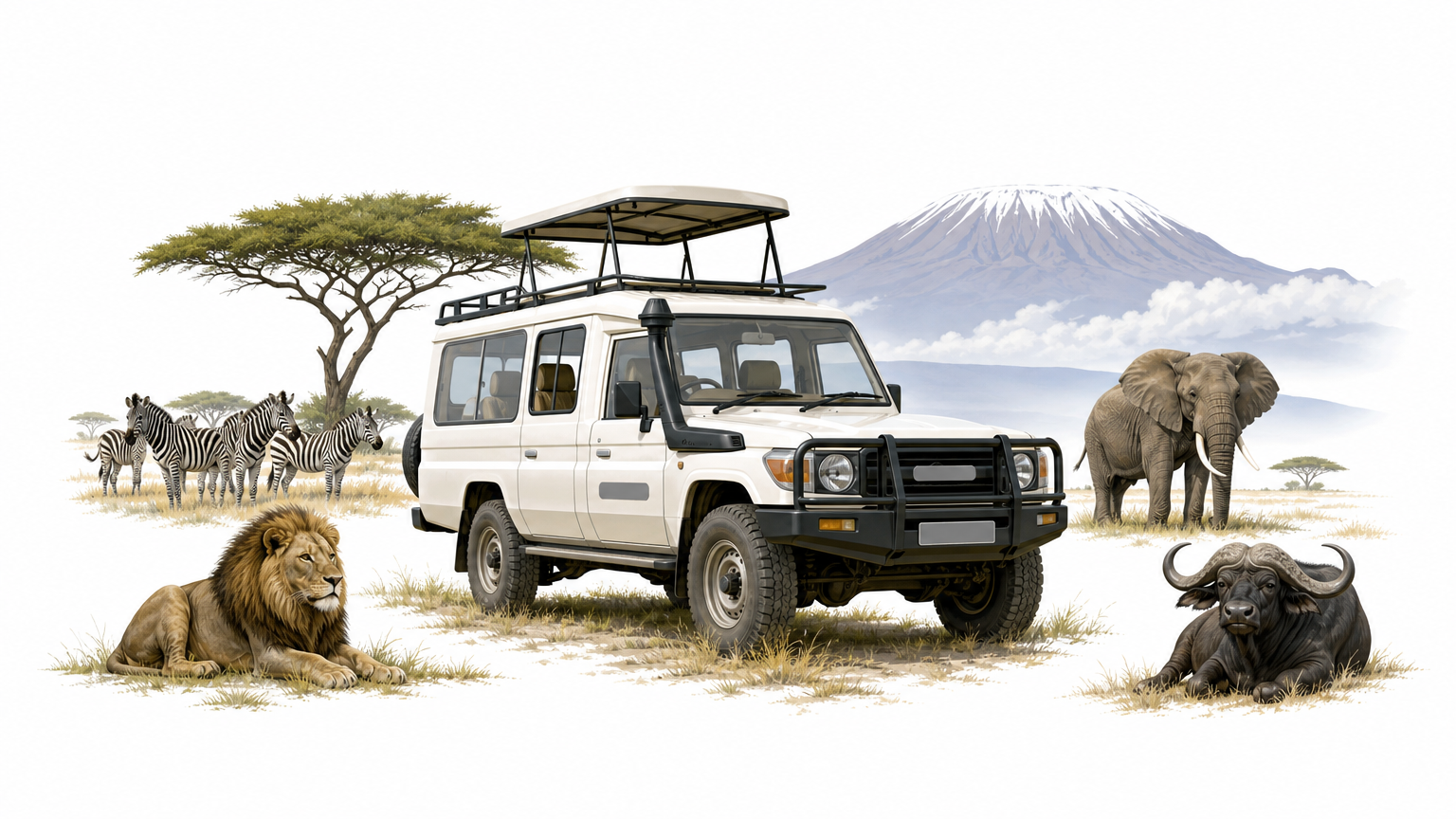
Our 9-day Ultimate Kenya and Tanzania Safari is the trip we suggest most often to first-time visitors. It links the best parks in both countries in one private itinerary, with a single border crossing and no park visited twice. The plan below is a typical shape, and we adjust it to your dates and pace.
| Days | Stop | Main draw |
|---|---|---|
| 1 | Nairobi | Arrival and briefing |
| 2-3 | Amboseli | Elephants with Kilimanjaro behind them |
| 4-5 | Masai Mara | Big cats, plus river crossings in season |
| 6-7 | Serengeti | Endless plains and resident predators |
| 8 | Ngorongoro Crater | Dense wildlife on the crater floor |
| 9 | Arusha | Departure |
Most operators squeeze this route into seven days. Nine gives each park at least two game drives, and that is where sightings turn from lucky to reliable.
Nine days is the shortest trip that covers both countries without turning the safari into a commute.
Who it is for
Couples, families with teenagers, and small groups of friends get the most from this tour. It suits anyone who wants a first African safari that feels complete, with the Big Five, the migration plains, and a crater all in one go. You travel in your own vehicle with a driver-guide, so you decide when to linger at a sighting and when to move on.
Skip it if you only have five or six days. In that case, a Kenya-only trip serves you better than a rushed two-country one.
Accommodation and price range
Expect a mix of lodges and tented camps, chosen to match the comfort level you ask for. Every tier is available, from budget-friendly stays to luxury lodges. Nine days across two countries sits between our 3-day Amboseli escape (from $609) and our 10-day luxury trips (up to about $6,500). Your exact price depends on lodge tier, dates, and group size, so we quote each trip individually and revise it with you until it fits. Park fees and the cross-border transfer are the items that vary most between quotes, so ask for them to be itemized.
Best time to take it
Aim for late June to October. The Great Migration is in the Mara and northern Serengeti, the grass is short, and the roads are dry. January and February are a strong second choice, with calving in the southern Serengeti and fewer vehicles. Amboseli gives its clearest Kilimanjaro views in the early morning during dry months. April and May bring the long rains, lower prices, and muddy tracks, which suits flexible travelers on a tighter budget.
2. Classic 10-day Masai Mara to Serengeti itinerary
Route and highlights
This is the classic Kenya Tanzania safari, built on one idea: the Mara and Serengeti are a single ecosystem split by a border. You spend real time in each instead of sampling five parks. Crossing at Isebania costs you nothing in wildlife, and you simply switch to a Tanzanian vehicle on the far side.
- Day 1: Nairobi arrival
- Days 2-4: Masai Mara game drives
- Day 5: Border crossing, transfer into the Serengeti
- Days 6-8: Central and northern Serengeti
- Day 9: Ngorongoro Crater
- Day 10: Arusha departure
Three nights in each big ecosystem beat one night in five parks.
Who it is for
Pick this if you want depth over variety. It suits repeat safari-goers, photographers, and couples who would rather sit with a lion pride for an hour than tick off another park.
Skip it if Kilimanjaro views matter to you. Amboseli is not on this route, so see entry 5 instead.
Accommodation and price range
Mid-range lodges and tented camps are the sweet spot here. Expect roughly $3,500 to $5,500 per person for a private vehicle with a driver-guide, depending on tier and season. Luxury camps push that higher.
Prices for Kenya and Tanzania safari packages like this one jump in peak months, so book early. Ask whether Serengeti park fees and the border transfer are included.
Best time to take it
Go from late June to October for river crossings and dry, easy driving. Camps in the northern Serengeti book out first.
January and February also work well, with calving in the south. The long rains in April and May bring lower rates but slower roads.
3. Great Migration safari across both countries
Route and highlights
The Great Migration is not a place. It is a loop of roughly 1.5 million wildebeest plus zebras and gazelles, so the best Kenya Tanzania safari for it follows the herds. A typical August plan runs four nights in the Masai Mara, a border transfer, then three nights in the northern Serengeti. You can watch Mara River crossings from both banks, which doubles your chances of seeing one.
| Months | Where the herds are |
|---|---|
| Jan-Mar | Southern Serengeti, calving |
| Apr-Jun | Central and western Serengeti |
| Jul-Oct | Northern Serengeti and Masai Mara |
| Nov-Dec | Moving back south |
The herds set the itinerary, so build the trip around them, not the other way around.
Who it is for
Photographers, first-timers, and anyone who has dreamed of a river crossing should pick this one. It also suits travelers who want the single most famous wildlife event on earth.
Skip it if crowds bother you. July to September brings the most vehicles to the Mara, and a good guide is what keeps you out of the queues.
Accommodation and price range
Peak-season rates apply, so expect roughly $4,500 to $7,000 per person for 8 to 9 days with a private vehicle. Mid-range tented camps near the river cost less than luxury camps, and both beat a distant lodge that adds hours of driving.
Book 9 to 12 months ahead for July to September. Camps closest to the crossing points sell out first.
Best time to take it
Plan for late July to September for river crossings in the north. Crossings are unpredictable, so give yourself at least three nights at each river.
For calves instead of crossings, go in February. You get fewer vehicles, lower prices, and plenty of predators.
4. Luxury flying safari between Kenya and Tanzania
Route and highlights
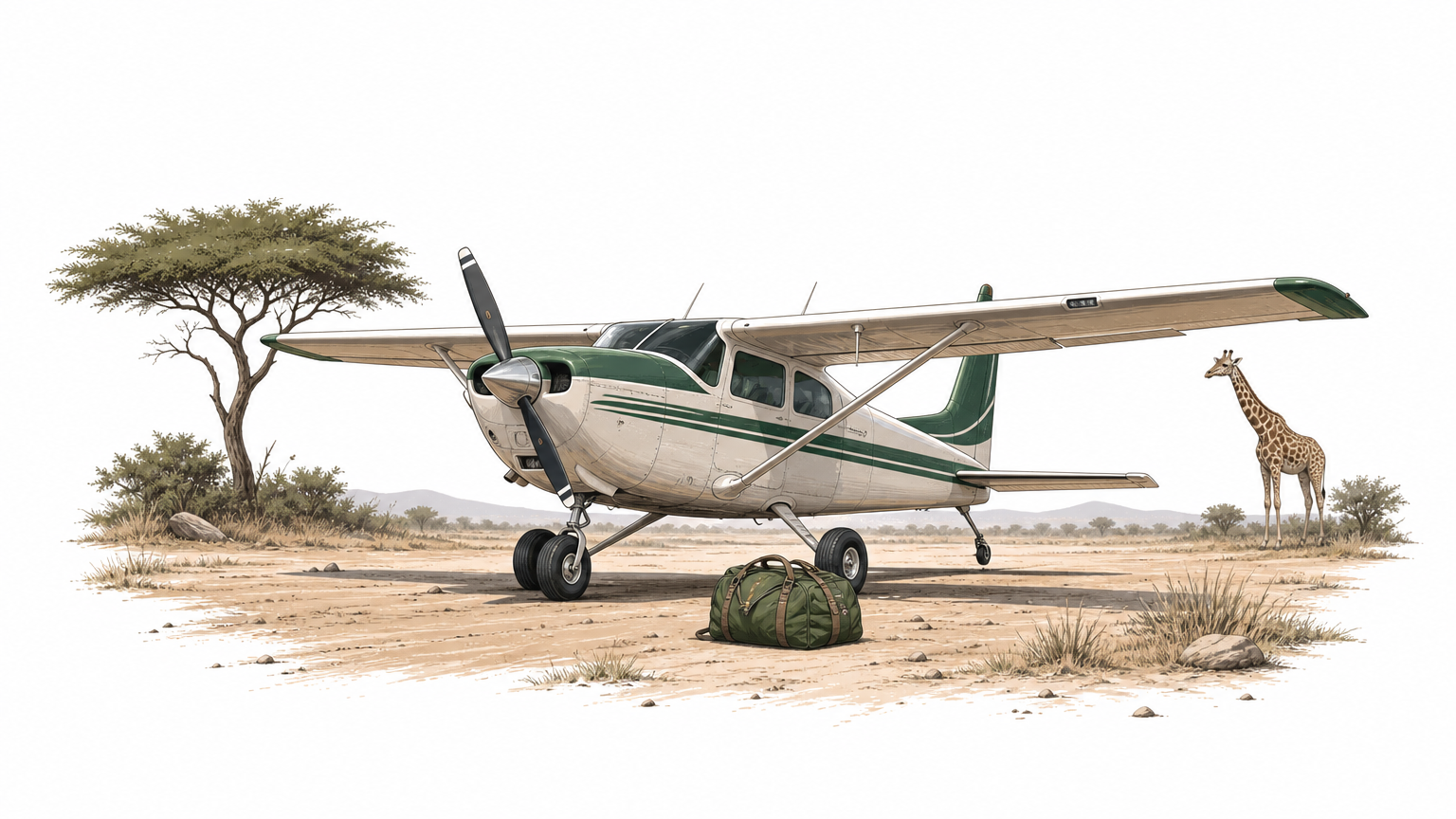
Flying replaces long road transfers with short hops over the plains. Our Grand Kenya Flying Safari links Samburu, the Mara and Amboseli by light aircraft, and the same idea stretches into a safari in Tanzania and Kenya once you add the Serengeti. You land on bush airstrips, and your game drives start within minutes of touchdown.
| Leg | Flight time | Road alternative |
|---|---|---|
| Nairobi to Masai Mara | about 45 min | 5 to 6 hours |
| Mara to Serengeti | about 1 hour | 6+ hours with the border |
| Serengeti to Arusha | about 1.25 hours | around 8 hours |
Flying gives you back the one thing money cannot buy on safari: daylight at the sighting.
Who it is for
Choose this if time is tight or comfort matters. It suits honeymooners, luxury seekers, and anyone with a week or less who still wants both countries. Light aircraft limit you to soft bags of roughly 33 lb (15 kg), so heavy packers should look elsewhere.
Accommodation and price range
Expect premium lodges and small luxury camps with private decks, plunge pools, and top guides. Our luxury flying itineraries start near $6,500 per person, and cross-border versions with premium camps usually run higher. The price covers charter or scheduled flights, so ask which one you are getting, because charters cost more but run on your schedule.
Best time to take it
Go from late June to October for the migration in the Mara and northern Serengeti. January and February also work well. Rain affects flying less than driving, so the green months of November and April still deliver, with lower rates.
5. Amboseli, Kilimanjaro views and Tarangire elephant safari
Route and highlights
This route puts two elephant strongholds into one Kenya Tanzania safari. You start in Amboseli, where herds cross open plains with Kilimanjaro behind them. Then you cross at Namanga and finish in Tarangire, known for baobab-dotted hills and big dry-season elephant herds.
- Day 1: Nairobi arrival
- Days 2-3: Amboseli game drives
- Day 4: Namanga border, transfer to Tarangire
- Days 5-6: Tarangire National Park
- Day 7: Arusha departure
Amboseli gives you the mountain, and Tarangire gives you the elephants.
Who it is for
Photographers, families, and elephant lovers get the most from this trip. The flat light and close elephant encounters are hard to beat, and the drives between parks are shorter than on the Serengeti routes.
Skip it if the Great Migration is your priority. Neither park hosts the herds, so look at entry 3 instead.
Accommodation and price range
Mid-range lodges and tented camps work well here, and Amboseli has comfortable lodges with mountain-facing rooms. Expect roughly $2,200 to $3,800 per person for 6 to 7 days with a private vehicle, depending on tier and season.
Ask for park fees and the border transfer to be itemized. They change the total more than the lodge does.
Best time to take it
Go from June to October. Tarangire's river is the only reliable water, so elephants concentrate there, and Kilimanjaro is clearest in the early morning. January and February are also good.
Avoid April and May. Clouds hide the summit, and tall grass makes animals harder to spot.
6. Mid-range tented camp safari
Route and highlights
This Kenya Tanzania safari swaps hotel-style lodges for canvas camps set close to the wildlife routes. Each tent has a real bed, an en-suite bathroom, and hot water. You hear hyenas and hippos from your pillow.
- Day 1: Nairobi arrival
- Day 2: Lake Naivasha, boat ride and walking safari
- Days 3-5: Masai Mara game drives
- Day 6: Border crossing, transfer into the Serengeti
- Day 7: Central Serengeti
- Day 8: Arusha departure
A tent on the plains puts you closer to the animals than a lodge on the hill ever will.
Who it is for
Couples, families with older children, and first-time safari-goers who want atmosphere without luxury prices will like this one. You get the feel of the bush and still sleep comfortably.
Skip it if you want a spa, air conditioning, or a pool. Mid-range camps keep things simple, and canvas walls do not block night noise, so light sleepers should pack earplugs.
Accommodation and price range
Expect mid-range tented camps with en-suite bathrooms, solar lighting, and good food in a shared dining tent. Eight days with a private vehicle and driver-guide runs roughly $2,900 to $4,300 per person, depending on season and group size. Peak months sit at the top of that range.
Ask where each camp sits. A camp inside or beside the reserve saves you an hour or more of driving each day compared with one on the boundary, and that is often worth a small price jump.
Best time to take it
Go from late June to October for the migration and dry roads. Book early, because mid-range camps near the Mara River fill first.
November, January, and February are good value. Rain is lighter, rates drop, and tents stay comfortable as long as you avoid the April and May downpours.
7. Budget group joining safari
Route and highlights
This is the cheapest way to book safari tours in Kenya and Tanzania without giving up the big parks. You ride in a shared vehicle with other travelers on a fixed route, so the cost of the driver-guide and fuel is split between four to seven people. A typical 7-day plan looks like this:
- Day 1: Nairobi arrival
- Days 2-3: Amboseli game drives
- Day 4: Namanga border, transfer to Arusha
- Day 5: Tarangire National Park
- Day 6: Ngorongoro Crater
- Day 7: Arusha departure
A shared van cuts the price, but it also hands over control of your schedule.
Who it is for
Solo travelers and budget-minded couples get the most from this format. You also meet other travelers, which many solo visitors enjoy.
Skip it if you want to set your own pace. Departure times are fixed, and one slow photographer holds up the whole van. Friends traveling together do better on a private group trip, where we set the pace around you.
Accommodation and price range
Expect budget lodges and basic tented camps with simple en-suite or shared bathrooms. For 7 days, plan on roughly $1,600 to $2,600 per person, depending on season and group size.
Before you pay, ask how many seats the vehicle has and whether every passenger gets a window seat. Also check that park fees are included, because they are the line item that most often goes missing from cheap quotes.
Best time to take it
The shoulder months of November, January, and February give the best value. Rates drop, parks are quieter, and the weather is mostly kind.
July to September fills shared departures fast, so book at least six months ahead. April and May are cheapest, but muddy tracks can slow a fixed itinerary.
8. Family safari in Kenya and Tanzania
Route and highlights
This safari in Tanzania and Kenya is paced for short attention spans. Each day has one big payoff, and no drive runs longer than about four hours on the road.
- Day 1: Nairobi, Giraffe Centre
- Day 2: Naivasha, boat ride and cycling
- Days 3-4: Masai Mara game drives
- Days 5-6: Serengeti, after the border crossing
- Day 7: Ngorongoro Crater, then Arusha
Fewer parks and shorter drives make a better family safari than a longer checklist.
Who it is for
Families with children aged 6 and up get the most from it. Younger kids cope with the road time less well, and some lodges set minimum ages.
Parents who want control will like the private vehicle. You can stop for a bathroom break, a snack, or a 40-minute zebra stare without a van full of strangers waiting.
Accommodation and price range
Choose family tents or connected rooms in mid-range lodges with a pool, which gives kids somewhere to burn off energy. Expect roughly $2,800 to $4,500 per adult for 8 days, with children's rates often 25% to 50% lower when they share your room.
Check age policies and fence security before you book. Ask about laundry and early dinners too.
Best time to take it
School holidays decide most family trips. July and August bring the migration and dry weather, but also the highest prices and the most vehicles.
Consider late December to February for calving season and lighter crowds. Skip April and May, when rain turns long drives into long days.
9. Honeymoon safari with Zanzibar or Diani beach
Route and highlights
Bush first, beach second. This safari in Tanzania and Kenya ends on sand instead of a long drive, and you choose Diani Beach or Zanzibar for the finish. Diani is about an hour's flight from Nairobi, while Zanzibar connects through Arusha.
- Day 1: Nairobi arrival
- Days 2-4: Masai Mara game drives
- Days 5-6: Serengeti, after the border crossing
- Day 7: Fly to the coast
- Days 8-10: Beach days, then departure
Finish on the sand, because a honeymoon needs slow mornings after the early starts.
Who it is for
Newlyweds and anniversary couples who want adventure and rest in one trip get the most from it. Your private vehicle means no strangers on your sunset drive.
Skip it if you want to see more parks. Beach days eat into game-viewing time, so add days instead of cutting the safari short.
Accommodation and price range
Expect intimate tented camps or boutique lodges with private decks in the bush, then a beach resort or villa. Ten days runs roughly $4,200 to $7,000 per person, depending on tier and season. Diani costs less to reach, since Zanzibar adds a second flight.
Ask about honeymoon extras such as room upgrades and a private bush dinner. Good camps often add them at little or no cost.
Best time to take it
Late June to October pairs the migration with dry, breezy beach weather. Late December to February gives calm, hot seas, though the coast gets busy over the holidays.
Avoid April and May. Heavy coastal rain closes some resorts, and ocean days turn gray.
10. Photography and birding safari
Route and highlights
This safari in Tanzania and Kenya is built around light and time, not distance. You stay longer at fewer stops, and your driver-guide plans each day around sunrise and the last golden hour. A 9-day shape looks like this:
- Day 1: Nairobi arrival
- Day 2: Lake Naivasha, hippos and water birds
- Days 3-5: Masai Mara, big cats and raptors
- Day 6: Border crossing, transfer into the Serengeti
- Days 7-8: Serengeti plains
- Day 9: Arusha departure
The best safari photos come from staying put, not from covering ground.
Birders can swap a Mara night for Amboseli's swamps. Both countries log more than 1,000 species, so flamingos, raptors, and bee-eaters fill the gaps between big sightings.
Who it is for
Photographers who care about frames more than checklists get the most from this trip. It also suits serious birders and the partners who happily travel along without a camera. A private vehicle means nobody rushes you off a leopard.
Skip it if you want a fast, sightseeing-style tour. Long waits at one sighting are the whole method here.
Accommodation and price range
Expect mid-range to premium tented camps and lodges, picked for good light, quiet grounds, and early breakfasts. Nine days with a private vehicle runs roughly $3,800 to $6,000 per person, depending on tier and season.
Ask for a vehicle with a roof hatch, a window seat for every guest, and a charging inverter. Also confirm how many people ride in the vehicle, because a full van ruins lens space.
Best time to take it
Go from late June to October for river crossings, dust-backed light, and dry roads. January and February add calving and migratory birds from Europe.
Rain clears the air and flattens harsh light, but April and May bring cloud and muddy tracks, so plan those months with care.
Kenya vs Tanzania: how the two safaris differ
Both countries share one wildlife system, yet they run safaris in different ways. Knowing the split helps you divide your days on a Kenya Tanzania safari, and it tells you whether you need both countries at all.
Landscapes and wildlife
Expect more variety in Kenya and more open space in Tanzania. The table shows the main contrasts.
| Feature | Kenya | Tanzania |
|---|---|---|
| Signature parks | Masai Mara, Amboseli, Samburu | Serengeti, Ngorongoro, Tarangire |
| Migration | Mara, roughly July to October | Serengeti, year-round, calving January to March |
| Walking and night drives | Allowed in private conservancies | Limited inside national parks |
| Beach finish | Diani | Zanzibar |
| Feel | Compact, varied scenery | Vast plains, fewer vehicles |
Kenya gives you variety and easy access, while Tanzania gives you space and scale.
Rules, crowds and logistics
Private conservancies around the Mara permit night drives, walking safaris, and off-road driving, which national parks forbid. Tanzania answers with size. The Serengeti covers about 5,700 square miles, so the crowds thin out fast once you leave the river.
Distances also differ. Nairobi is a hub with short flights to most Kenyan parks, but Tanzania's best parks sit far from Arusha, so budget extra driving days there. For a first African safari in Kenya and Tanzania, we suggest nine days or more. That gives you Kenya's access and Tanzania's space without a rushed commute.
How much a Kenya and Tanzania safari costs
Typical prices by style
A safari in Tanzania and Kenya runs from about $1,600 to well over $7,000 per person, and the tier you pick explains most of that gap. The ranges below come from the 10 tours above and assume a driver-guide and park transport.
| Style | Typical length | Per person |
|---|---|---|
| Budget group joining | 7 days | $1,600 to $2,600 |
| Mid-range private | 7 to 8 days | $2,200 to $4,300 |
| Migration peak season | 8 to 9 days | $4,500 to $7,000 |
| Luxury flying safari | 7 to 10 days | from $6,500 |
Lodge tier and travel season set your price more than the number of parks you visit.
What moves your quote
Park fees cause the biggest swings. Both countries charge them per person per day, and they rise in peak months, so ask for them itemized. Over a week they can add several hundred dollars to a quote that looked cheap.
Group size matters next. A private vehicle and driver-guide cost the same for two guests or five, so the per-person price falls as your group grows. Couples pay more each than a family of four, and solo travelers usually pay a single supplement.
Extras sit outside most Kenya and Tanzania safari packages. International flights, visas, tips, travel insurance, and drinks at camp are rarely included, so budget 10% to 15% on top of the quoted price. Compare quotes line by line, because a cheaper total often just leaves something out.
Best time to go on a Kenya and Tanzania safari
The right month for a safari in Tanzania and Kenya depends on what you want to see, because both countries share two dry seasons and two rainy ones. Wildlife is good all year. What changes is the crowds, the price, and which sighting you get.
Season by season
| Months | Conditions | What you get |
|---|---|---|
| Jan-Feb | Short dry season | Calving in the southern Serengeti, fewer vehicles |
| Mar-May | Long rains | Lowest rates, green scenery, some camps close |
| Jun-Oct | Long dry season | River crossings, easy spotting, peak rates |
| Nov-Dec | Short rains | Brief afternoon showers, newborn animals, migratory birds |
Dry months thin the bush and push animals toward water, so they are easy to find. That makes June to October the safest pick for a first African safari in Kenya and Tanzania, though it is also when prices peak and the Mara is busiest.
Pick your month by the sighting you want, then plan everything else around it.
How to choose your month
Let your priority decide. Each of these works well:
- River crossings: late July to September
- Calving and quiet: February
- Best value with decent weather: November, or the first half of December
- Lowest price, with flexibility: late April to May
Whatever you choose, book early for July to September. Camps near the Mara River can sell out 9 to 12 months ahead. Shoulder months are easier, and a good operator can usually still find rooms about three to four months out.
Border crossings, visas and health requirements
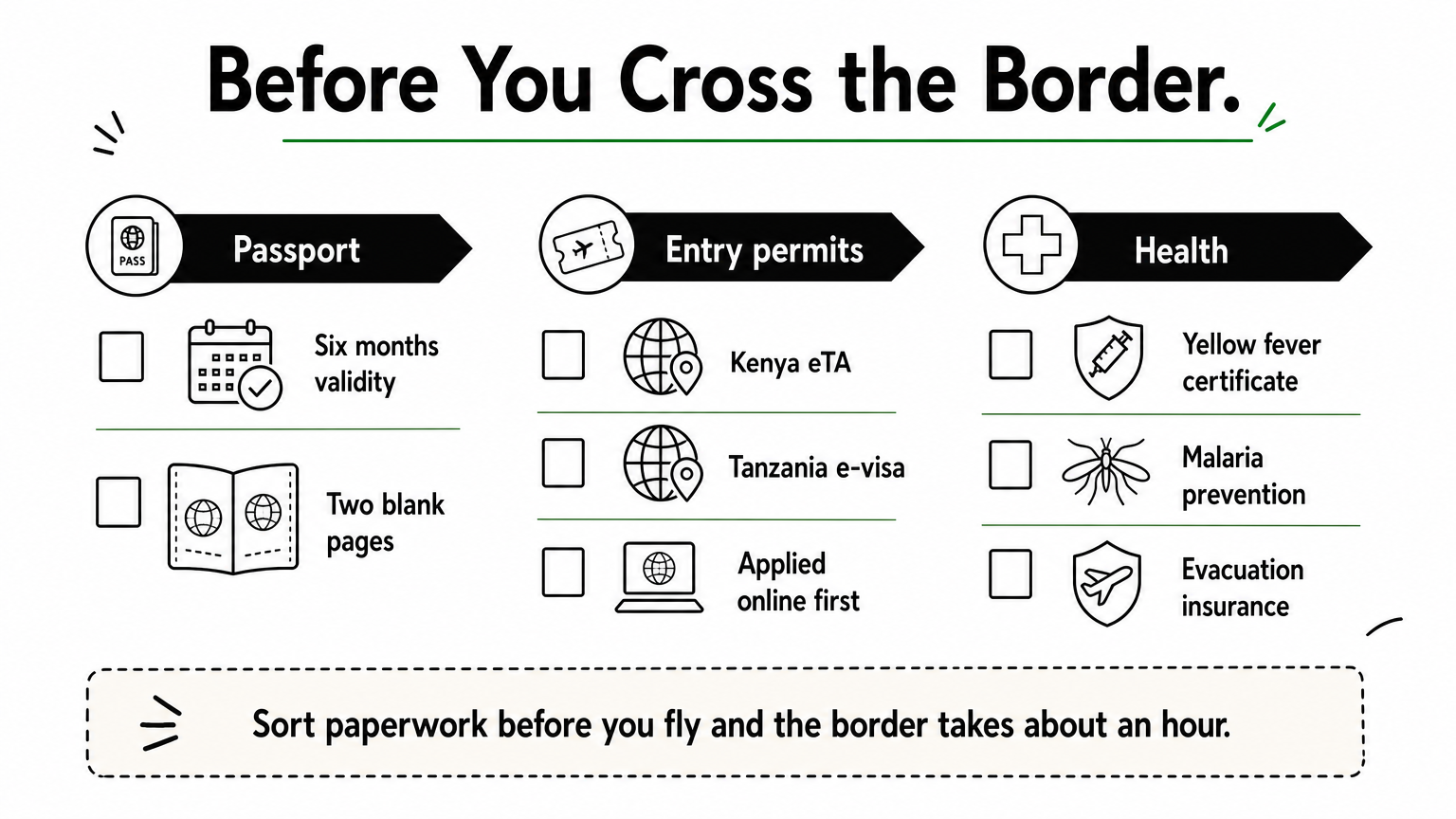
Crossing between the two countries is routine on a safari in Tanzania and Kenya, but paperwork trips up more travelers than the road does. Sort it out before you fly, and the border takes about an hour.
How the border crossing works
Three posts handle most safari traffic. Your driver-guide walks you through immigration on both sides, and you switch to a Tanzanian vehicle on the far side.
| Border post | Typical route |
|---|---|
| Namanga | Amboseli to Arusha or Tarangire |
| Isebania / Sirari | Masai Mara to Serengeti |
| Taveta / Holili | Tsavo or Amboseli to Moshi |
Your vehicle changes at the border, but your visa and passport must be ready before you reach it.
Visas and entry documents
Kenya requires an Electronic Travel Authorisation (eTA), which you apply for online before departure. Tanzania offers an online e-visa, usually $50, or $100 for US citizens. The East Africa Tourist Visa does not cover Tanzania, so skip it for this route.
Your passport needs six months of validity and at least two blank pages. Fees and rules change, so confirm them on each government's official immigration site before you pay.
Health requirements
Health rules are simple, but one item catches people out. Carry these:
- Yellow fever certificate: Tanzania can ask for it when you arrive from Kenya, so carry it to be safe.
- Malaria prevention: Both countries are risk areas. See a travel doctor 4 to 6 weeks before you go.
- Travel insurance: Choose a policy that includes medical evacuation, such as a flying doctor service.
- Routine vaccines: Check that tetanus, hepatitis A, and typhoid are up to date.
How to choose and book the right safari tour
Picking among Kenya and Tanzania safari tours comes down to four decisions: when you go, how many days you have, how private you want it, and what you will spend. Settle those first, and the 10 tours above shrink to two or three.
Match the tour to your priorities
Start with your dates, because they decide which sightings are possible. Then set a realistic budget and a minimum of nine days if you want both countries without a rushed commute. After that, let your main interest pick the tour:
- River crossings: entry 3 or entry 2
- Elephants and Kilimanjaro views: entry 5
- Value for money: entry 6 or entry 7
- Short on time or after comfort: entry 4
- Kids, honeymoon, or cameras: entries 8, 9, and 10
Choose the sighting you want most, and let the route follow it.
Questions to ask before you pay
Compare quotes line by line, because a cheap total usually leaves something out. Put these questions to every operator, and expect clear answers:
- Is the vehicle private, and how many seats does it have?
- Are park fees and the border transfer included and itemized?
- Which camps will we use, and how far are they from the wildlife?
- What is the cancellation policy, in writing?
- Who is the driver-guide, and how long have they guided?
Vague replies are a warning sign. Itemized prices and named camps are what a reliable operator offers without being pushed.
How booking works with us
Our process has three steps. You share your idea: dates, group size, parks, and style. We send a custom itinerary and quote, then revise it with you until it fits. You travel with a team member on call by WhatsApp.
Timing matters as much as price. For July to September, book 9 to 12 months ahead, since camps near the Mara River sell out first. Shoulder months are easier, and three to four months usually works.
Choosing the safari that fits you
The best safari in Tanzania and Kenya is not the one with the most parks. It is the one that matches your dates, your pace, and your budget. Nine days or more, a private vehicle with a driver-guide, and a clear idea of the sighting you want most will do more for your trip than any extra stop.
Start with the month. Late June to October brings the river crossings, while February offers calving and quiet. Then pick from the 10 tours above, compare quotes line by line, and insist on itemized park fees and named camps. A cheap total usually leaves something out.
Ready to turn a shortlist into a plan? Tell us your dates, group size, and style, and we will design your private safari with a custom itinerary and quote, revised with you until it fits. A real person is always on call by WhatsApp, whatever your time zone.