

 中文
 عربي
 Français
 Nederlands
 Deutsch
 Italiano
 Português
 Español
Is Kenya safe for solo female travellers? Yes, for most trips, as long as you plan well and stay alert in a few specific places. Safari parks, lodges and camps are among the lowest-risk parts of the country. Nairobi's streets after dark, crowded public transport and the far northeast near the Somalia border carry more risk. The problems visitors meet most often are petty theft, road accidents and unwanted attention, not violent crime.
Extra Miles Unique Adventures has been a Nairobi-based tour operator since 2007, and we plan trips for solo travelers, women included. This article draws on that day-to-day work. It also answers the broader question of whether Kenya is safe for women of any age or background.
Below you will find the real risks, an area-by-area view of where to relax and where to be careful, the precautions that work, and the questions to ask before you book a trip.
Why Kenya is safe if you plan around the real risks
Kenya works for women traveling alone because its risks are specific and predictable. You can avoid most of them with a few habits, which is very different from a country where danger is random.
The risks that actually matter
Most trouble falls into the six categories below. Violent crime against tourists is uncommon, but it does happen, so treat the list as a planning tool, not a guarantee.
| Risk | Where it happens | What reduces it |
|---|---|---|
| Phone and bag snatching | Central Nairobi, traffic jams, busy markets | Keep phones out of sight, doors locked, windows up |
| Road accidents | Highways, any night driving | Use a vetted driver and avoid driving after dark |
| Harassment and persistent touts | Cities, beach towns, bus stops | Say a firm "no thank you" and keep walking |
| Spiked drinks and scams | Bars, nightlife, street offers | Watch your drink and never accept one from a stranger |
| Terrorism and unrest | Counties near Somalia, some protests | Check your government's advisory and skip demonstrations |
| Malaria and illness | Lowland and coastal areas | Get a doctor's advice on prophylaxis and use repellent |
Terrorism deserves a plain word. Nairobi saw attacks in 2013 and 2019, but most incidents have been in the northeast near the Somali border. Check the US State Department travel advisory and the CDC's Kenya health page shortly before you fly, because both change.
Kenya's risks are specific and predictable, so you can plan around nearly all of them.
Kenya or Tanzania, and does nationality matter?
Neither country is clearly safer for a woman traveling alone. Both have secure lodges and guided game drives, and both have petty theft in their big cities. Choose between them on wildlife, season and budget, not on safety.
Foreign visitors of any background stand out, which attracts touts and opportunistic thieves. That includes white American tourists. It rarely means hostility. Treat any ranking of "safest African countries" with caution unless it is recent and cites current advisories.
Where to be careful and where you can relax
Safety in Kenya depends more on where you are than on which country you picked. Lodges and parks are the calmest places, Nairobi and the coast need street smarts, and a few border regions are best skipped.
A quick map of risk by area
| Area | Typical risk | Advice for a solo woman |
|---|---|---|
| Nairobi city center | Snatch theft, pickpockets | Go by day, use a rideshare after dark |
| Karen, Westlands, Gigiri | Lower, mostly petty theft | Comfortable by day, rideshare at night |
| Mombasa, Diani, Malindi | Hustlers, theft on empty beaches | Skip empty beaches at night, dress modestly in town |
| Masai Mara, Amboseli, Samburu, Naivasha | Lowest, wildlife is the main hazard | Follow camp and guide rules |
| Mandera, Wajir, Garissa and the Somalia border | Terrorism, kidnapping | Check advisories, most visitors have no reason to go |
Nairobi, the coast and the parks
Nairobi is where most solo women feel the most tension. It is a large, busy capital, and phone snatching through car windows is the classic problem. Stay in a well-reviewed neighborhood and keep your daytime plans simple. A single day trip such as a private game drive in Nairobi National Park is an easy first outing.

On the coast, expect friendly but persistent vendors on the beach. Away from the resorts, cover your shoulders and knees, especially in Muslim communities. In the parks, your biggest hazard is wildlife, which is why every camp has night-time rules you should follow.
Precautions that work for women traveling alone
The most effective precautions are boring ones: arrange transport in advance, avoid night movement, and keep your valuables out of sight. Add the right paperwork and a few habits, and you remove most of the risk.
Before you fly
- Buy travel insurance that covers medical care and evacuation.
- See a travel clinic four to six weeks ahead for malaria and yellow fever advice.
- Check Kenya's entry requirements, including the electronic travel authorization, on the official government site.
- Enroll in your government's traveler program (US citizens can use STEP).
- Share your itinerary and hotel details with someone at home.
- Carry a local SIM or eSIM and keep copies of your passport.
On the ground
Book your airport pickup before you land, and use Uber or Bolt in Nairobi rather than unmarked taxis. Do not walk alone after dark, even for short distances. Carry only the cash and cards you need for the day.
Expect catcalls and offers of friendship, especially in cities and beach towns. A calm "no, thank you" and continued walking works better than arguing. Tell a lie if you need to, such as saying a friend is waiting for you. Pour your own drinks, or watch them being poured.
On safari
Camps are fenced or guarded, but wildlife can still wander through. Never walk alone at night inside a camp. Ask for the askari, the camp guard, to walk you to your tent. In the vehicle, stay inside unless your guide says it is safe to step out.
At night, in town or in camp, never walk alone: arrange a ride or ask for an escort.
If something goes wrong
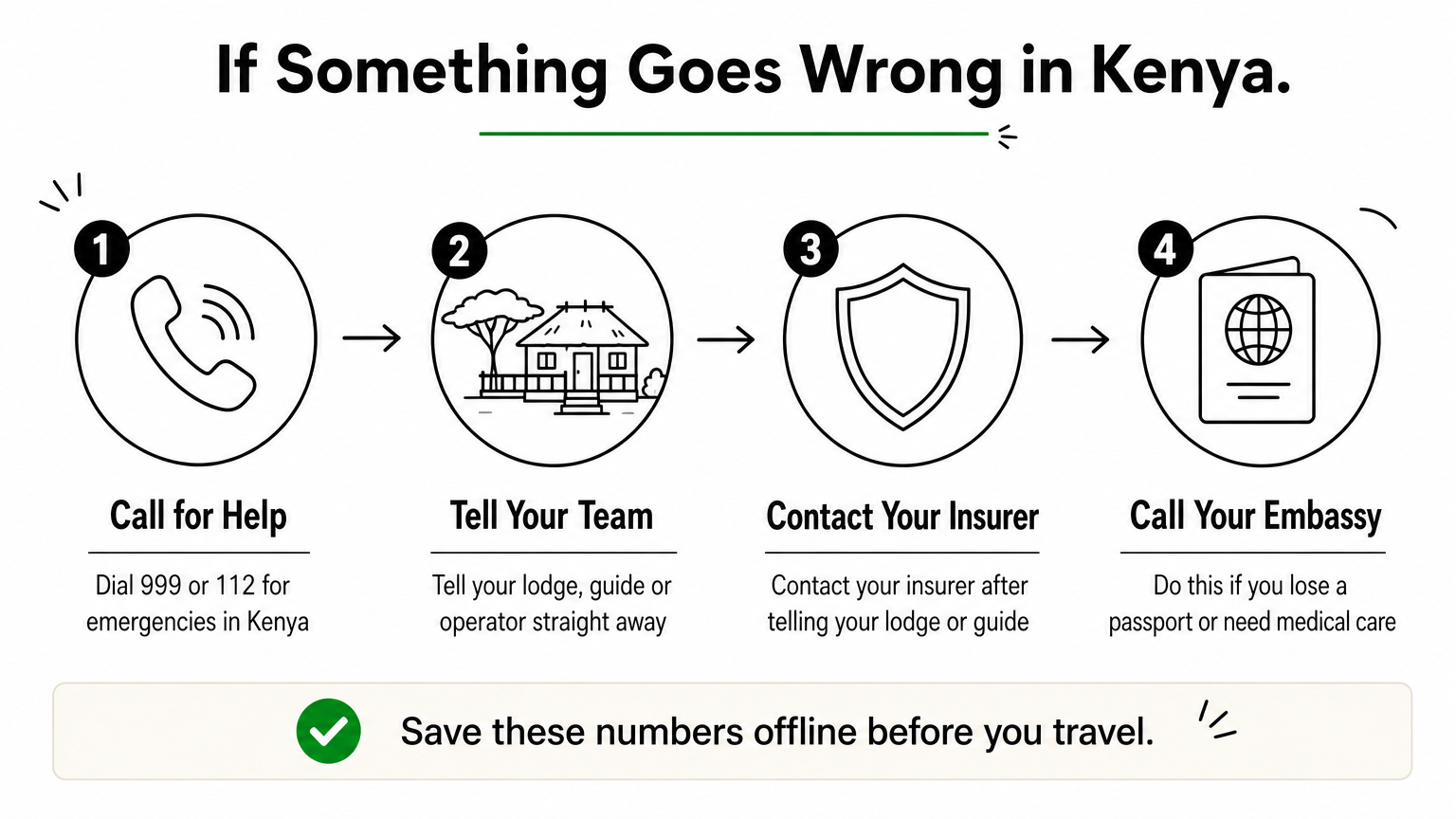
Call 999 or 112 for emergencies in Kenya. Tell your lodge, guide or operator straight away, then contact your insurer and your embassy if you lose a passport or need medical care. Keep these numbers saved offline before you travel.
Is a private safari the safest way to go solo?
A private or small-group safari with a vetted driver-guide is the lowest-risk way for most women to see Kenya alone. Someone else handles transport, timing and lodging, so you skip the situations where most problems start.
What a planned trip removes
You do not navigate unfamiliar roads, drive at night or arrange rides from strangers. Your driver-guide knows the parks and the local conditions, and your lodges are chosen in advance. Self-driving is the option we would steer a first-time solo woman away from, because road conditions and night driving are the larger risk.
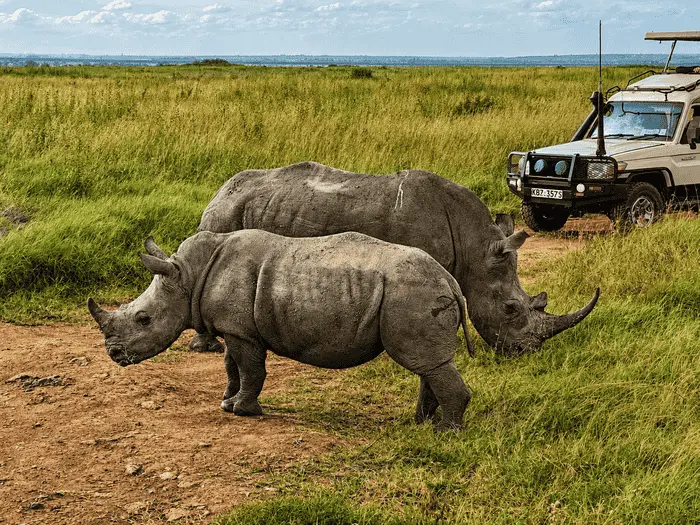
Our private trips run in pop-up roof 4x4 Land Cruisers. For a gentle start, the 1-Day Nairobi Wildlife & Culture Experience is a private day built around Nairobi National Park. The 3 Days Amboseli National Park Safari starts from $609 and includes meals.
Questions to ask any operator
- Who is my guide, and can I see reviews?
- Who meets me at the airport?
- Is there a 24-hour emergency contact?
- What security do the lodges have?
- Is there a single supplement?
- What is the cancellation policy?
Our team replies to enquiries within 24 hours, and you can message us on WhatsApp.
The safest solo trip is one where you know who meets you, who drives you and who to call.
Go with a plan, not with fear
Kenya is a safe country for most women traveling alone, provided you respect its real risks: petty theft in cities, night movement, road safety and a few border regions. Handle transport in advance, dress sensibly, and pick a guide you trust. If you want a trip designed around those priorities, tell us your dates and travel style and we will build a private itinerary and quote.