
 中文
 عربي
 Français
 Nederlands
 Deutsch
 Italiano
 Português
 Español
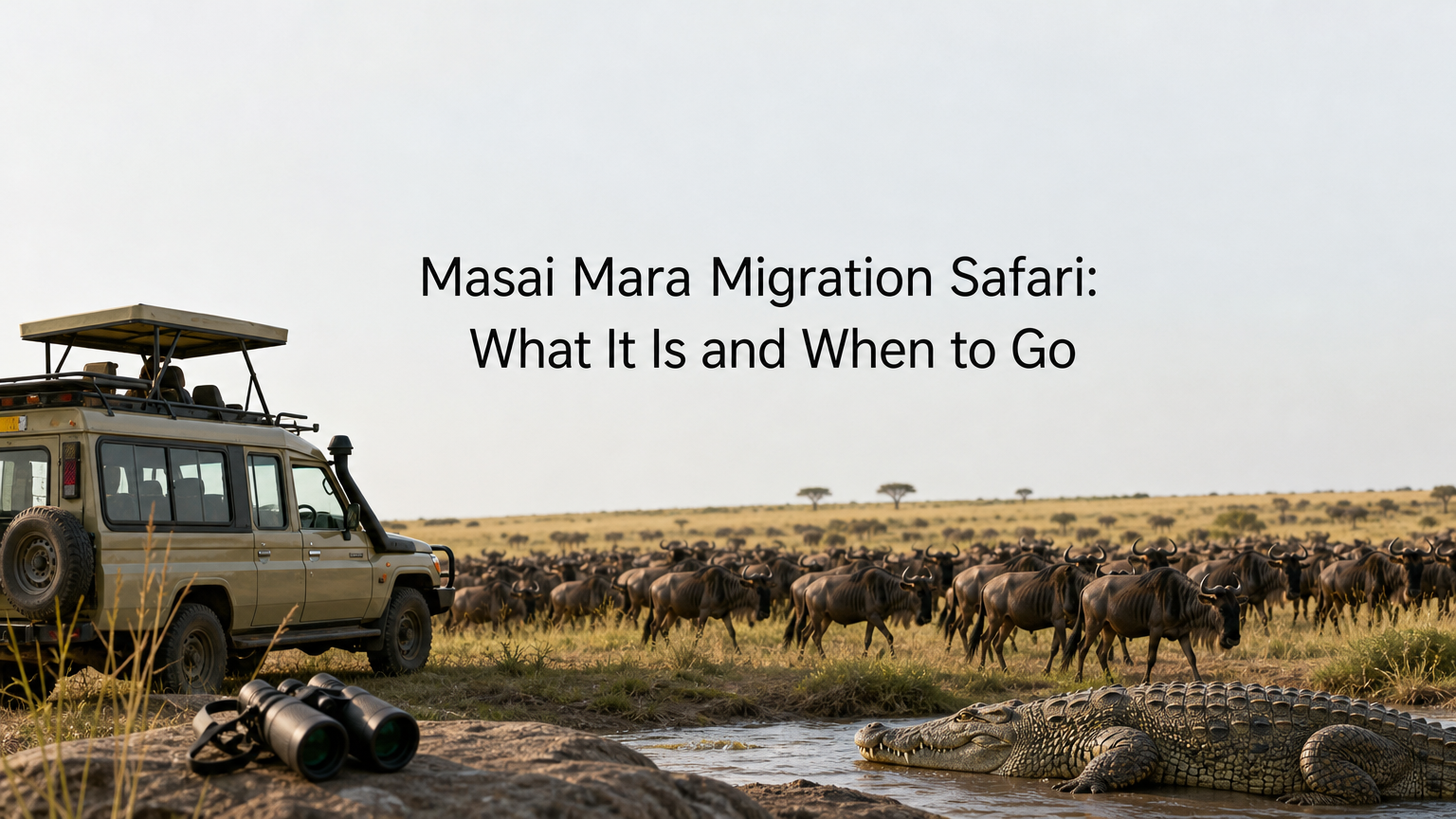
A Masai Mara migration safari is a trip to Kenya timed to watch the Great Migration, when about 1.5 million wildebeest, along with zebra and gazelles, cross from Tanzania's Serengeti into the Mara in search of fresh grass. The herds are in the Mara from roughly July to October. The best window is mid-July to late August, when the Mara River crossings peak. No operator can promise a crossing on a given day, so the smart plan is more days in the right place, not a tighter schedule.
This guide explains why timing and geography decide everything, how to choose your month, your base and your trip length, and what a migration day involves. It also shows what a trip costs, with sample itineraries side by side so you can compare before you ask for a quote.
Extra Miles Unique Adventures is a Nairobi-based tour operator that has run private Kenya safaris since 2007. The advice below reflects the routes, seasons and camps we plan around every year.
Why timing and place decide a migration safari
The herds follow rain and fresh grass, not a calendar, and only part of their yearly circuit passes through Kenya. That is why two travelers who visit the Masai Mara a month apart can have completely different trips.
The herds follow the rain
The Great Migration is a year-round, clockwise circuit across the Serengeti-Mara ecosystem. The animals spend most of the year in Tanzania. They calve on the southern plains around February and March, then drift north and west through the central Serengeti as the grass dries out. They reach the Mara from about July, graze its plains through September, and head back south from October or November as the short rains arrive.
Rain drives the timing, and rain is unreliable. Late or early rains can shift the whole schedule by weeks. Treat every date range you read, including ours, as a probable window and not a promise.
Why river crossings cannot be scheduled
The famous crossings happen at the Mara River, and also at the Talek River inside the reserve. Herds arrive at the bank and then do one of three things. Some swim straight over, some graze at the edge for days, and some turn back. No guide can tell you which. Nile crocodiles wait in the water, which is one reason the animals hesitate.
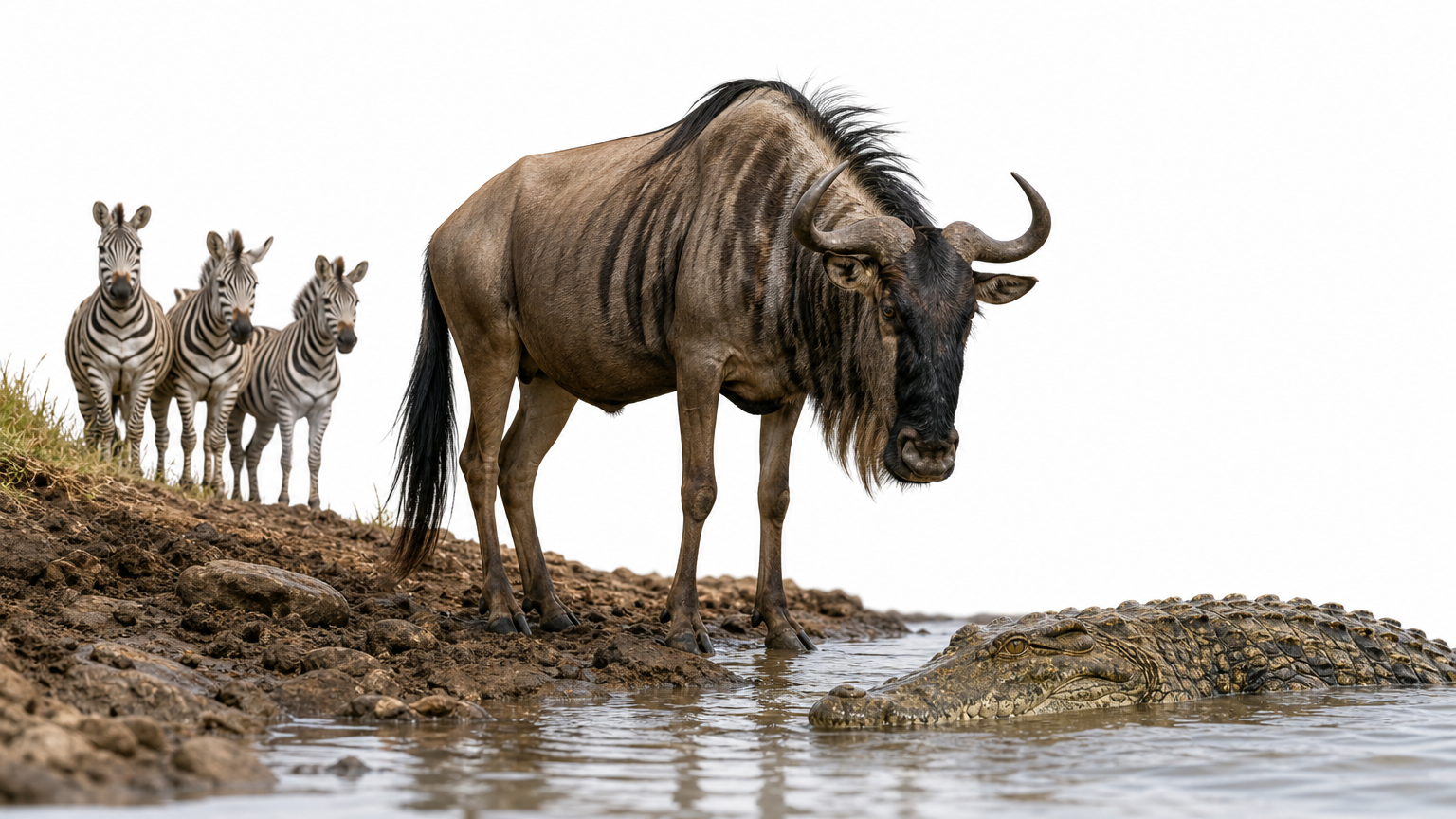
Three factors shape your odds of seeing a crossing:
- Rain timing: it decides when the herds reach the northern Serengeti and the Mara.
- Where the herds mass: crossing points shift slightly every year, though they stay in the same general area.
- Your days on the ground: each extra day at the river is another chance.
You cannot buy a river crossing, but you can buy more days in the right place to wait for one.
What you still see when the herds hold back
The Mara holds resident wildlife all year, including big cats, elephants, giraffe and large numbers of plains game. Predators gather around the herds, so even a day without a crossing can include a hunt or a close lion sighting.
The herds also do not move as one block. They split into groups of hundreds or thousands spread across a wide area, with forerunners and stragglers. Judge a migration safari by the hours you spend with the animals, not by one dramatic scene.
How to plan your Masai Mara migration safari
Pick the month first, then a base close to the river, then enough days to wait for a crossing. For most travelers that means mid-July to August, a camp near the crossing points, and at least four days.
Choose your month
The table below shows where the herds usually are through the year. It is a general guide, and rain can move any row by weeks.
| Months | Where the herds are | What you can see |
|---|---|---|
| January to March | Southern Serengeti, Tanzania | Calving, with births peaking around February. No herds in the Mara. |
| April to May | Moving north-west through the central Serengeti | Long columns on the move and the breeding season. |
| June | Central and western Serengeti | Possible Grumeti River crossings. |
| July | Northern Serengeti, with first arrivals in the Mara | First Mara River crossings from mid to late July. |
| August | Northern Mara and the river | Peak crossings, with most herds in Kenya. |
| September | Masai Mara | Crossings continue, with herds grazing across the plains. |
| October | Masai Mara, then moving south | Late crossings, first rains, and the return begins. |
| November to December | Northern, then southern Serengeti | Herds back in Tanzania. |
Choose mid-July to late August if a crossing is your priority, and pick August if you must name one month. September often feels calmer, with fewer vehicles at the river, and it still puts you among the herds. July to October is the usual Masai Mara safari migration window. If you want newborn calves instead, go to Tanzania in January or February.
For the best odds of a crossing, choose August, and plan for at least four days.
Choose where to stay
Your camp's distance from the crossing points matters more than its star rating. Some camps in the reserve sit up to an hour's drive from the best vantage points, which eats into your waiting time. Ask your operator how far the camp is from the Mara and Talek River crossings in your travel month.
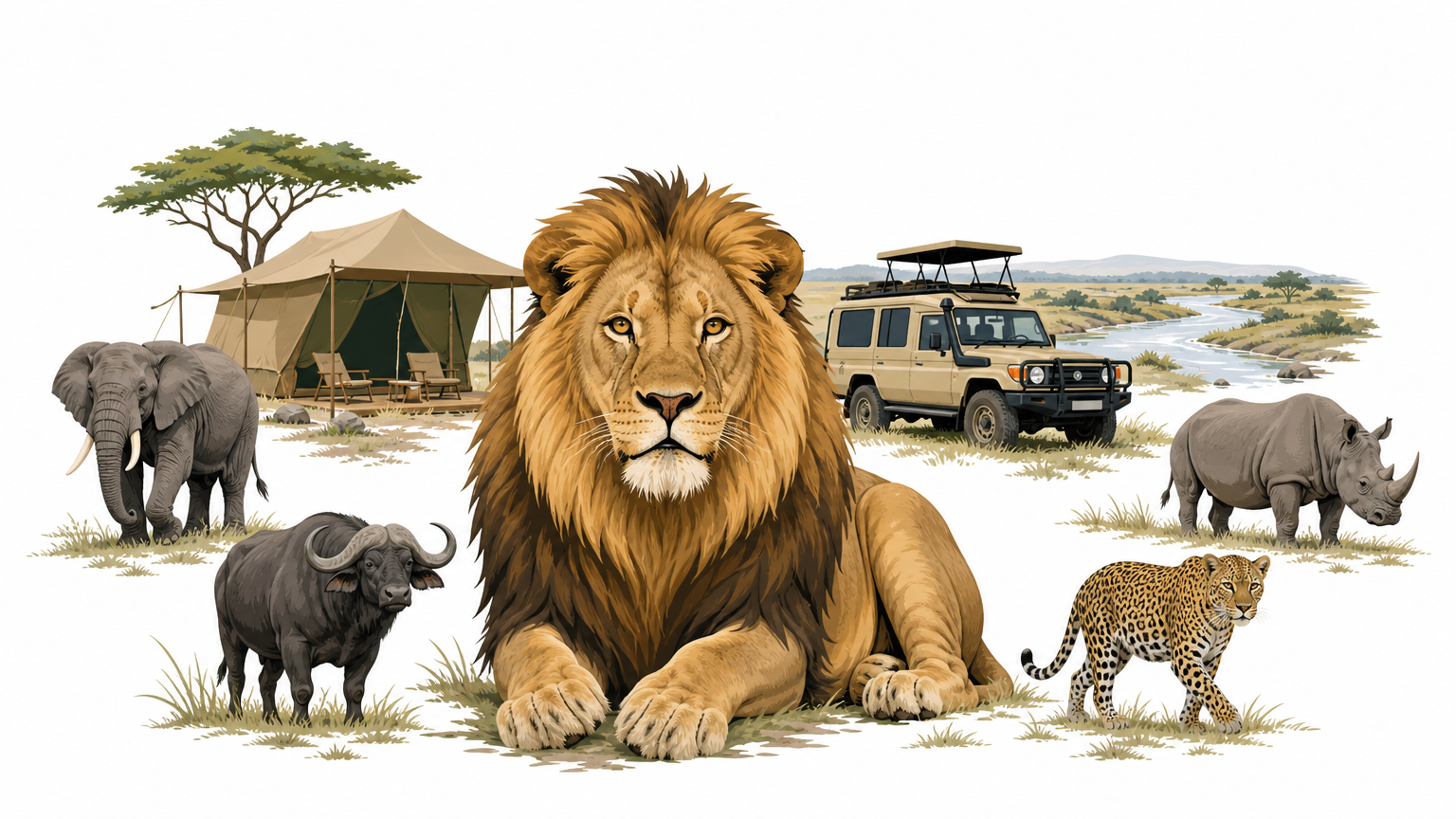
You also choose between the reserve and the private conservancies next to it. The reserve is open to everyone and gets crowded from July to October. The conservancies are quieter and allow activities the reserve does not, such as off-road driving, night drives and guided walks. Many travelers split the difference by staying in a conservancy and driving into the reserve for the river.
The Kenya side is not the only option. The same herds cross from the northern Serengeti in Tanzania, and a combined route covers both sides. Our 9-day Kenya and Tanzania safari, for example, includes the Serengeti, Ngorongoro Crater and the Masai Mara.
Decide how many days you need
Four days is the practical minimum, and five to seven is better. A trip of four days and three nights gives you several game drives, but a crossing needs patience. You may spend a full day at the bank and see nothing, then watch a herd cross at breakfast the next morning.
Book early. Camps in the Mara are small and fill fast from July to October, so start planning up to a year ahead. Flying from Nairobi to the Mara saves a long day on the road, and it matters most on short trips where every hour counts.
What a migration safari day involves
A migration day starts before sunrise, follows the herds or a crossing point in a 4x4, and often includes long stretches of waiting. It is slower and more patient than an ordinary game-drive day.
A typical day on the plains
Most days follow the same rhythm, adjusted to where the herds are:
- First light: leave camp for a morning drive, when it is cool and predators are active.
- Late morning: return for breakfast and a rest, unless a herd is massing at the river.
- Midday: lunch at camp, or a packed lunch at a crossing point.
- Afternoon: a second drive that runs until near sunset.
When you travel specifically for the migration, your guide may plan a full-day outing with a packed lunch and station the vehicle at a likely crossing point. That is why a skilled driver-guide matters more than any other part of the trip. The guide reads the herds, knows which bank they are favoring that season and decides when to wait and when to move. Our private trips use a pop-up roof Land Cruiser with a professional driver-guide, so you can stand and shoot from your seat.
Crossings, crowds and photography
Peak months bring many vehicles to the popular crossing points, and you may have to queue for a position. A good guide keeps your vehicle at a respectful distance from the bank. Crowding can make the herds reluctant to cross.
Photographers should know that crossings often happen around midday, when the light is harsh and flat. Bring a long lens, a spare battery and a lens cloth for the dust. If the crowds worry you, the conservancies near the reserve offer far fewer vehicles.
What to pack and prepare
Pack for cold mornings, hot middays and the occasional shower. Dress in neutral colors and take layers, closed shoes and a rain jacket, especially for October and November. Binoculars matter as much as a camera. Bring sunscreen, a hat and any prescription medication in your hand luggage.
Check Kenya's current entry requirements, including the electronic travel authorization, well before you buy flights. Travel insurance that covers medical evacuation is worth having for any remote safari.
What a migration safari costs and sample trips
Starting prices run from $990 per person for a 4-day private Masai Mara trip to $5,405 for a 10-day luxury route through Kenya and Tanzania. International flights are not included in any of them.
Sample trips and starting prices
The trips below are from-prices per person. Your quote moves with dates, group size and lodge tier, and migration months are high season, so treat these as a floor and not your final figure.
| Trip | Length | Route and stay | From price |
|---|---|---|---|
| Let's Explore the Masai Mara National Reserve | 4 days | Nairobi to Mara Serena Safari Lodge | $990 |
| Masai Mara and Lake Nakuru Safari | 4 days | Lake Nakuru, then two Mara nights | $1,185 |
| Ultra-Luxury Kenya Flying Safari | 4 days | Fly to Soroi Mara Bush Camp, then Lake Nakuru | $2,070 |
| Kenya Classic Wildlife and Birding Safari | 8 days | Nairobi to the Masai Mara | $2,405 |
| Amboseli to Masai Mara Luxury Fly-In | 6 days | Ol Tukai Lodge, Mara Serena Safari Lodge | $2,908 |
| Ultimate Kenya and Tanzania Safari | 9 days | Serengeti, Ngorongoro, Mara, Lake Nakuru | $3,429 |
| The Grand East African Luxury Safari | 10 days | Mara, Serengeti, Ngorongoro Crater | $5,405 |
Note that the Mara and Lake Nakuru trip gives you only two nights in the Mara. For a migration-focused trip, a plan that puts more nights at the river usually serves you better than one that adds a second park.
A worked example for two travelers
Take a couple on the 4-day Masai Mara trip at the from-price. The safari costs $990 per person, or $1,980 for two. That works out to about $248 per person per day. Add the tipping guideline of $10 per person per day for the guide and crew, which is $80 for two people over four days. The total is $2,060 before international flights.
The 4-day trip includes park fees, an airport roundtrip transfer, a professional driver-guide, a pop-up roof Land Cruiser, taxes and meals as specified. The price per day rises with comfort: the 10-day Grand East African route starts at about $540 per person per day.
How group size and sharing change the price
Group size moves the per-person price noticeably. On the 6-day Amboseli and Mara fly-in, the published rate for November 1 to December 19, 2026 is $4,807 solo, $3,468 for two and $2,908 for six. Traveling with friends or family can cut the cost per person by a third or more.
A shared group safari is the cheapest route into the Mara. You split a vehicle and guide with other travelers, and our published shared 3-day departures run roughly $380 to $620 per person. The trade-off is control. In a shared vehicle you cannot decide to spend a whole day at the river. If a crossing is the point of your trip, a private vehicle is worth the extra cost.
Spend your budget on days at the river first, and on lodge comfort second.
Pick your dates, then plan around them
A Masai Mara migration safari works best when you choose the month by what you want to see, stay near the river, and give the herds at least four days to cooperate. Mid-July to late August gives the best odds of a crossing, and the Mara still delivers excellent wildlife when the herds hold back. Expect to pay more in migration months, so compare quotes for your exact dates and not just starting prices.
If you want help matching a route to your month, group size and budget, request a tailored itinerary and quote. Tell us your preferred dates, number of travelers and style, and our team will build a private plan around them. You can also message us on WhatsApp.