
 中文
 عربي
 Français
 Nederlands
 Deutsch
 Italiano
 Português
 Español
The best African family safari tours depend on your youngest child's age more than on any single park. For most families, Kenya is the easiest start: most operators set no minimum age for game drives, the parks are compact, and a beach finish is simple to add. Tanzania suits families with school-age kids who can handle longer drives. Malaria-free South African reserves suit toddlers and parents who want to skip antimalarial pills. Botswana rewards teenagers and patient older kids.
The trouble is that most listings sell the same Big Five photo and bury the details that decide a family trip. Those details are lodge age limits, malaria zones, hours in the vehicle, and what a realistic price looks like. This article compares seven family safari options on exactly those points, then shows you how to match one to your children and your budget.
We are Extra Miles Unique Adventures, a Nairobi-based tour operator that has planned private safaris since 2007. Kenya comes first because it is what we plan every day. For the other six options, we tell you plainly where they fit your family better than Kenya does.
1. Kenya: Masai Mara and Amboseli with Extra Miles
Why families pick it
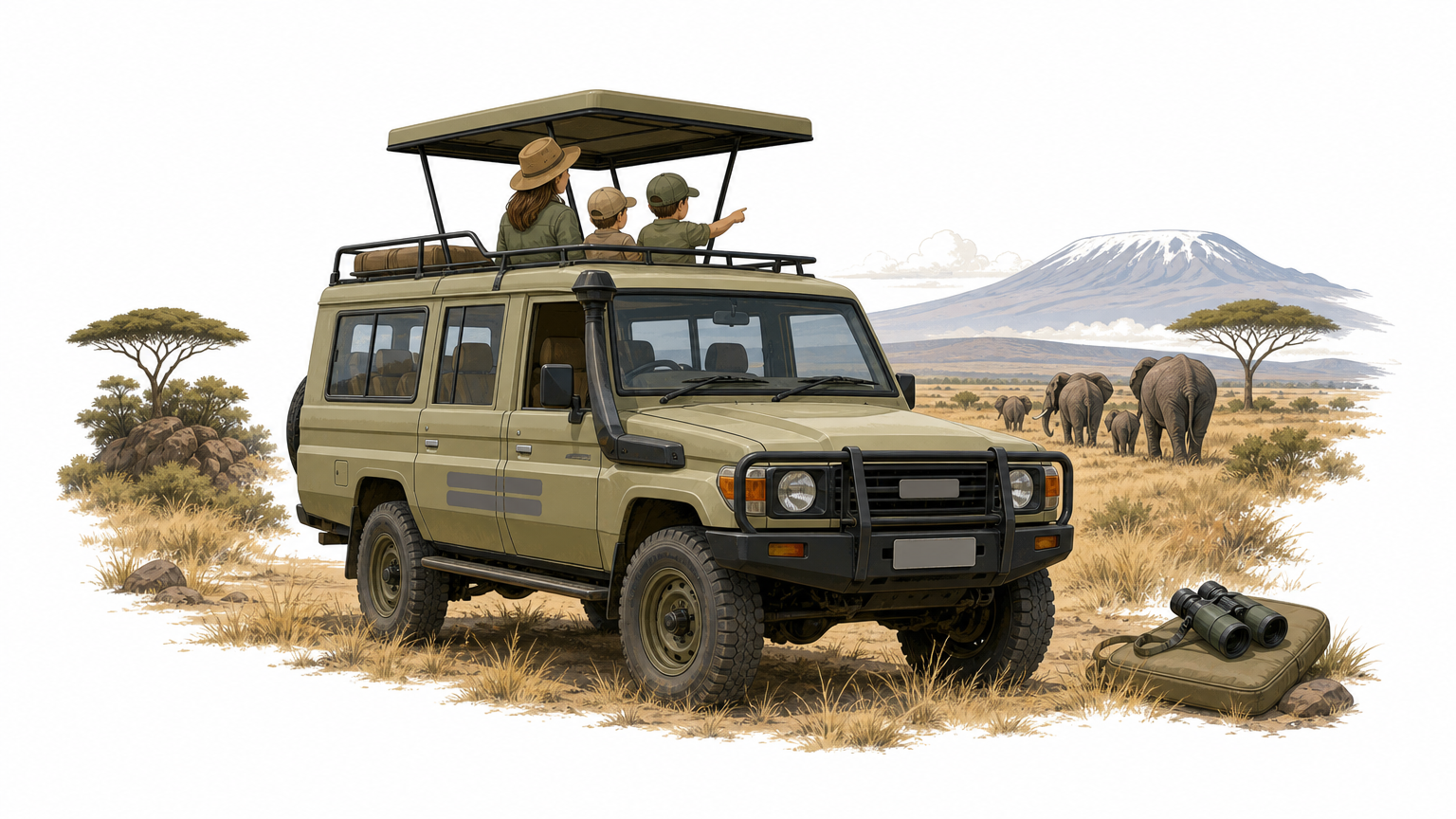
Kenya works for families because the wildlife is close and the transfers are short. The Masai Mara delivers big cats and, in season, the Great Migration river crossings. Amboseli National Park adds elephants walking in front of Mount Kilimanjaro, in a park small enough to cover in two or three days. Less time in the vehicle means more time looking, which is what keeps children engaged.
Extra Miles runs these trips as private safaris in a pop-up roof 4x4 Land Cruiser at a flexible pace. You can skip a sunrise drive when a toddler needs sleep, or stop early when a six-year-old has had enough. Beach add-ons are easy too: our 7-day safari and beach package ends with three nights at Baobab Beach Resort & Spa on the Indian Ocean coast.
Kenya's compact parks and private vehicles let you fit the safari around your kids, not the other way around.
Ages and health
Most Kenyan operators set no age limit for game drives, but lodges set their own rules. Ask for each property's child policy in writing when you request a quote. Malaria risk exists in most East African safari areas, so see a travel clinic or your pediatrician at least a month before departure. Entry and vaccine requirements depend on where you travel from, so check the CDC destination pages for Kenya and Tanzania.
Put these questions to every lodge:
- What is the minimum age for game drives and activities?
- Is the property fenced, and are there open decks or drops?
- Are there family rooms or connecting tents?
- Can kids eat early, and is there a pool?
Cost and timing
Kenya is generally cheaper than Tanzania and a good value for the wildlife you see. The dry months from June to October give the easiest game viewing, and the migration usually reaches the Mara around July. The March to May rains bring lower rates but muddier roads. These are our starting prices for private Kenya safari packages, and your quote moves with dates, group size and lodge tier:
| Package | Length | From price | Suits families who want |
|---|---|---|---|
| 3 Days Amboseli National Park Safari | 3 days / 2 nights | $609 | Elephants and Kilimanjaro views in little time |
| Let's Explore the Masai Mara | 4 days / 3 nights | $990 | A classic Mara stay at Mara Serena Safari Lodge |
| 4 Days Masai Mara and Lake Nakuru | 4 days / 3 nights | $1,185 | Rhinos and big cats in a short itinerary |
| 6-Day Kenya Big Five Express | 6 days / 5 nights | $1,378 | Amboseli, Nakuru and the Mara with daily game drives |
| 7-Day Kenya Safari & Beach Holiday | 7 days / 6 nights | $1,499 | Amboseli, Taita Hills and three beach nights |
2. Tanzania: the northern circuit
Why families pick it
Northern Tanzania strings together Tarangire, Lake Manyara, Ngorongoro Crater and the Serengeti in one loop. The Crater floor concentrates wildlife in a single caldera, and the Serengeti brings migration herds in season. Village visits add a cultural layer that children tend to remember longer than the lions.
Distances are the catch. Road days between the Crater and the Serengeti can run long, so ask your planner for driving hours per day and whether a short flight is worth the cost. Many families finish with a few days on Zanzibar, which resets everyone before the flight home.
Tanzania rewards families with kids who can sit through long drives, so check the daily driving hours before you book.
Ages and health
Most operators set no age limit on Tanzanian game drives, but the long days suit children from about six. Younger kids can manage with plenty of snacks, a nap-friendly vehicle and a limit on back-to-back drive days. Malaria risk is present across most safari areas, so the clinic advice from the Kenya section applies here too.
Check lodge policies as carefully as you would in Kenya. Some camps are open to wildlife, and fenced family-friendly properties are the safer pick for under-fives.
Cost and timing
Expect to pay more than in Kenya for a comparable trip. Park fees and lodge rates in the north are higher, and any internal flights add to the total. The dry season from June to October is easiest for wildlife viewing. Avoid the March to May rains if you want the smoothest ride with kids. If Tanzania is your target, a Kenya and Tanzania combination (the next option) often costs less than a Tanzania-only loop of the same length.
3. Kenya and Tanzania combined
Why families pick it
A combined trip lets you see the Masai Mara and the Serengeti on one itinerary, without an internal flight. Many of the best parks hug the Kenya and Tanzania border, so you can pair Amboseli or the Mara with northern Tanzania in a single overland route. Two countries, two ecosystems, one planner.
We plan this route as the 9-Day Ultimate Kenya and Tanzania Safari, and as a luxury version called The Grand East African Luxury Safari. A private vehicle and guide matter more here than anywhere, because the border crossing and the long days are far smoother when nobody else's schedule is involved.
A combined route gives you two famous ecosystems, but only if your children can handle several long driving days.
Ages and health
This is a trip for ages seven and up. With the extra road time and the border formalities, younger kids tire quickly. If you have a toddler, split the trip into two shorter ones or choose a single country. Health advice follows the Kenya and Tanzania guidance above: talk to a travel clinic about malaria, and check vaccine and entry requirements for both countries.
Cost and timing
Plan for a higher total than a Kenya-only trip, mostly because of the added days and Tanzanian park fees. Allow at least nine days so you are not rushing between countries. Travel from June to October for the best game viewing, or aim for July to October if the Mara-Serengeti migration is the main goal.
4. South Africa: malaria-free private reserves
Why families pick it
If you are traveling with a baby, a toddler, or parents who do not want antimalarial pills, malaria-free private reserves are the most relaxed choice. Madikwe, Tswalu Kalahari, Kwandwe and Welgevonden are the names to know. Madikwe is also handy for Johannesburg airport, which keeps transfers short after a long international flight.
These reserves tend to run the most child-focused operations in Africa. Many offer private vehicles, a guide and tracker for your family alone, kids' activities back at the lodge, and in some cases childcare while adults head out on a drive. That setup lets you stay on a nap schedule without missing the wildlife.
For under-sixes, a malaria-free reserve with childcare removes the two biggest worries at once.
Ages and health
Here the age limits bite. In southern Africa, many lodges will not take kids under six on game drives, and some set the minimum at eight. Family-oriented lodges are the exception, so look for properties that explicitly welcome small children and offer a babysitter or kids' program. Avoid lodges that merely tolerate them.
In the malaria-free reserves, no antimalarial medication is needed. Still, check with your clinic, because vaccine advice depends on your own health history and route.
Cost and timing
Prices span a wide range. Self-contained private camps sit at the top, while mid-range family lodges cost far less. The best viewing falls in the dry winter, June to September, when animals gather at waterholes. Mornings are cold on open vehicles, so pack fleece layers and hats for everyone. Madikwe is workable year-round, which helps if you are tied to school vacations.
5. South Africa: Kruger self-drive and nearby parks
Why families pick it
Kruger delivers some of the finest game viewing in Africa with the Big Five present, and it is one of the few places where you can self-drive with children. You set your own pace, stop when a toddler needs the bathroom, and watch animals from your own car. It is the cheapest option on this list per day, because you pay for a rental car and rest camps instead of a guide and private vehicle.
Add Hluhluwe-iMfolozi Park in KwaZulu-Natal for rhinos, or cross into Eswatini for a quieter wildlife sanctuary. Roads are generally good, though some stretches have potholes.
Self-drive in Kruger gives you the lowest-cost family safari, as long as you are comfortable being your own spotter.
Ages and health
No operator age limits apply when you drive yourself. The rules that matter are park rules: stay in the vehicle except at designated spots, keep windows up near predators, and be back at the gate before it closes. Children need patience, because sightings are not guaranteed and you do the searching.
Kruger is a low-malaria area, but risk rises from November to April, so a winter trip is simpler. Confirm advice with your doctor.
Cost and timing
Budget for flights, a rental car with child seats, rest camp or lodge stays, and park fees. Ask about child rates at each park. Winter, June to September, gives the clearest sightings and the lowest malaria risk. Because you have no guide, bring a good wildlife guidebook and a pair of binoculars for each child.
6. Botswana: Okavango Delta and Chobe
Why families pick it
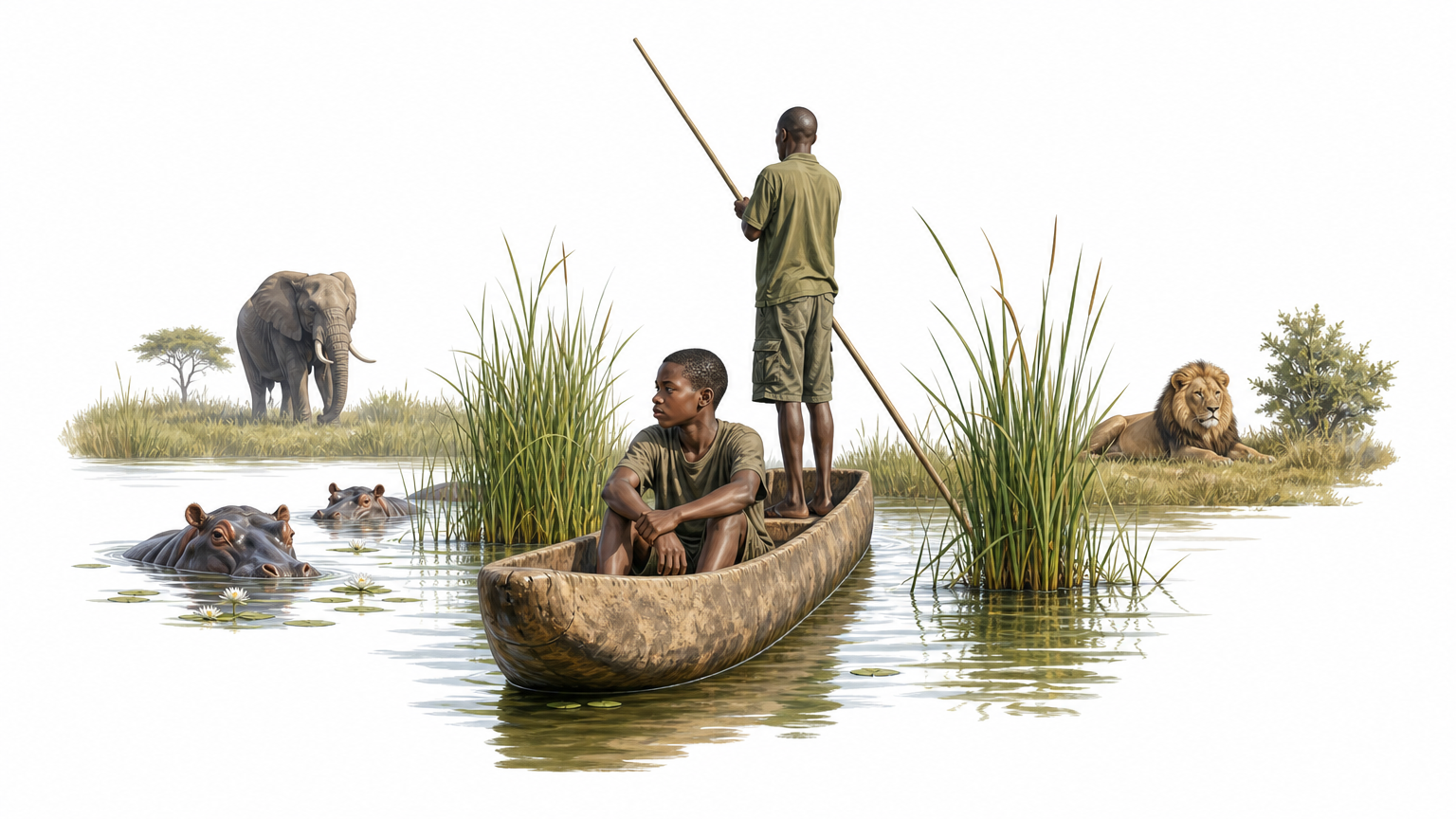
Botswana is the most hands-on safari on this list. The Okavango Delta lets you glide through channels in a mokoro, a traditional dugout canoe, while hippos and crocodiles watch from the reeds. Chobe is known for elephants in huge numbers, and many lodges run family tents and activities with a strong educational angle.
The camps are small and often reached by light aircraft, which makes the journey part of the adventure. It is an excellent second safari for families who already know the Kenya basics and want something quieter and more immersive.
Botswana is a safari for older kids and teens, because its best activities have age floors.
Ages and health
Age matters more here than anywhere else. Bush walks and canoe rides may only suit children aged 10 or 12 and up, and some elephant-interaction camps do not accept children under six at all. Check each camp's rules before you fall for its photos, and ask what the activity program looks like for your kids' ages.
Malaria risk is present in the north, especially in the wet season. Plan the clinic visit early and ask which regions carry the highest risk.
Cost and timing
Expect higher prices. Remote camps, light-aircraft transfers and small group sizes all add up. Travel in the dry season for the best wildlife viewing around the water channels. Christmas is wet and hot, so avoid it if you can. This is a trip to save for, not to squeeze into a tight budget.
7. Namibia: Etosha and the desert
Why families pick it
Namibia suits families who like landscapes as much as animals. Etosha National Park is the wildlife anchor, where zebra, elephant, giraffe, lion and rhino gather around waterholes. Beyond Etosha, kids can climb the dunes at Sossusvlei, try sandboarding, and meet the Himba people. The coast at Swakopmund adds a change of scenery.
The wildlife is less dense than in Kenya or Kruger, so Namibia works best as a second safari or an add-on to one. First-timers who mainly want to tick off the Big Five will be happier elsewhere.
Namibia is a road-trip safari, and it works best when your children care about dunes and desert as much as lions.
Ages and health
Self-drive is popular, so no operator age limit applies, but you need to stay in the car around wildlife. Children from about six enjoy the long scenic drives and the dune climbs. Malaria risk is low to none in most areas, which makes it attractive for families who want to avoid medication. A clinic check is still wise.
Cost and timing
Namibia is one of the more affordable safari destinations in Africa, especially if you self-drive and use mid-range lodges. Distances are long, so build in rest days. Dry-season months give the best waterhole viewing at Etosha. Fuel, car rental and park fees are your main costs, so price those before you compare it with a guided trip.
How to compare family safari tours before you book
Side-by-side comparison
Use this table to narrow the seven options in two minutes. Relative cost compares the options against each other, not against a fixed dollar figure.
| Option | Age sweet spot | Malaria | Best months | Relative cost |
|---|---|---|---|---|
| 1. Kenya | Any age; drives suit 4+ | Present in most parks | June to October | Moderate |
| 2. Tanzania north | 6+ | Present in most parks | June to October | Higher |
| 3. Kenya and Tanzania | 7+ | Present in most parks | June to October | Higher |
| 4. South Africa malaria-free reserves | Babies with childcare; 6+ for drives | None in malaria-free reserves | June to September | Moderate to higher |
| 5. Kruger self-drive | Any age | Low; higher November to April | June to September | Lower |
| 6. Botswana | 10+ for walks and canoes | Present in the north | Dry season | Higher |
| 7. Namibia | 6+ | Low to none | Dry season | Lower to moderate |
Matching the trip to your kids' ages
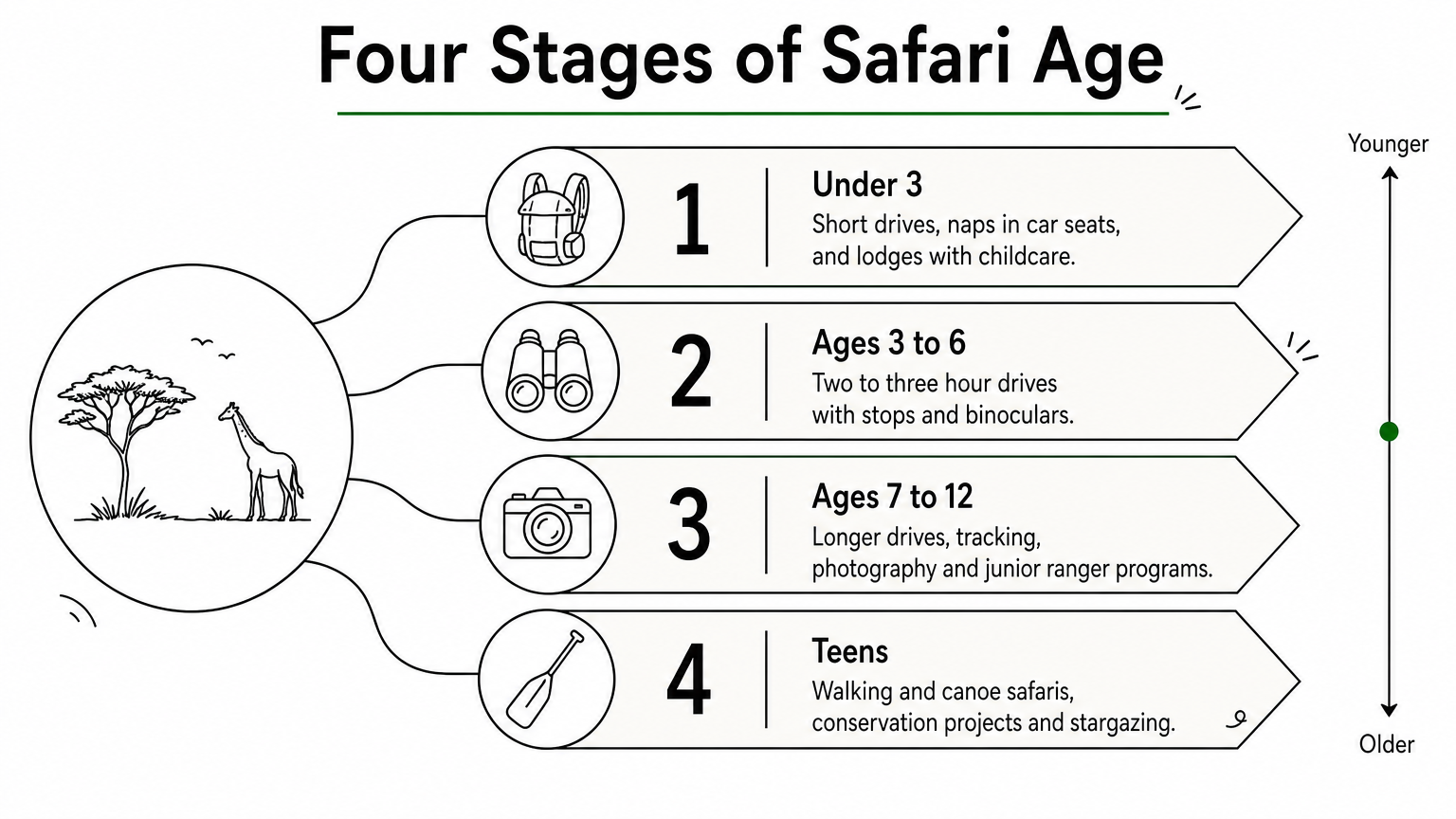
Age decides more than budget. Here is what works at each stage:
- Under 3: short drives, naps in a car seat or carrier, and lodges with childcare. Malaria-free reserves are the easiest.
- Ages 3 to 6: two to three hour drives with stops, binoculars, and lodge activities such as art and bush walks near camp. Expect some southern African lodges to refuse drives below six.
- Ages 7 to 12: longer drives, tracking, photography and junior ranger programs. This is the sweet spot for Tanzania and combined routes.
- Teens: walking and canoe safaris, conservation projects and stargazing. Botswana becomes realistic.
Whatever the age, tell children that animal sightings are never guaranteed. A safari is not a zoo. Binoculars and a simple wildlife checklist keep them looking during quiet stretches.
What a family safari costs
African safari costs vary because of four things: private versus group travel, lodge tier, season, and length. Extra Miles from-prices run from $609 for three days in Amboseli to about $6,500 for a 10-day bespoke luxury trip. Ask whether a quoted price covers one traveler or the whole group, and what discount applies to children.
Here is a worked example. If the 6-Day Kenya Big Five Express at $1,378 is quoted per person, four travelers come to $5,512 before international flights and any child discount. Flights often cost as much as the safari itself, so price them first. Add tips, visas and travel insurance to the total.
How to choose an operator
The best operator for a family is one that plans around your kids, not one with the biggest brand. Before you pay a deposit, check:
- Does the quote name each lodge and its child policy?
- Do you get a private vehicle and a guide who is happy to adapt the pace?
- Is the operator licensed in the country where it works?
- How fast do they reply, and is a real person available?
- What are the cancellation and rebooking terms?
For reference, we reply to enquiries within 24 hours, hold a 5.0 rating on Google from verified guests, and are listed on Safaribookings.com. Whichever operator you choose, ask for the same details in writing so you can compare quotes fairly.
Choosing your family's first safari
Match the trip to your youngest child. Kenya suits almost every age, malaria-free South African reserves suit babies and toddlers, Tanzania and combined routes suit school-age kids, and Botswana is for teens and patient older children. Kruger and Namibia keep costs down for families happy to drive themselves.
Whichever you pick, check lodge child policies, plan the malaria conversation with your doctor early, and keep game drives to a few days in a row. If Kenya is on your shortlist, request a tailored family safari quote with your dates, your children's ages and your budget, and we will send an itinerary built around them.