
 中文
 عربي
 Français
 Nederlands
 Deutsch
 Italiano
 Português
 Español
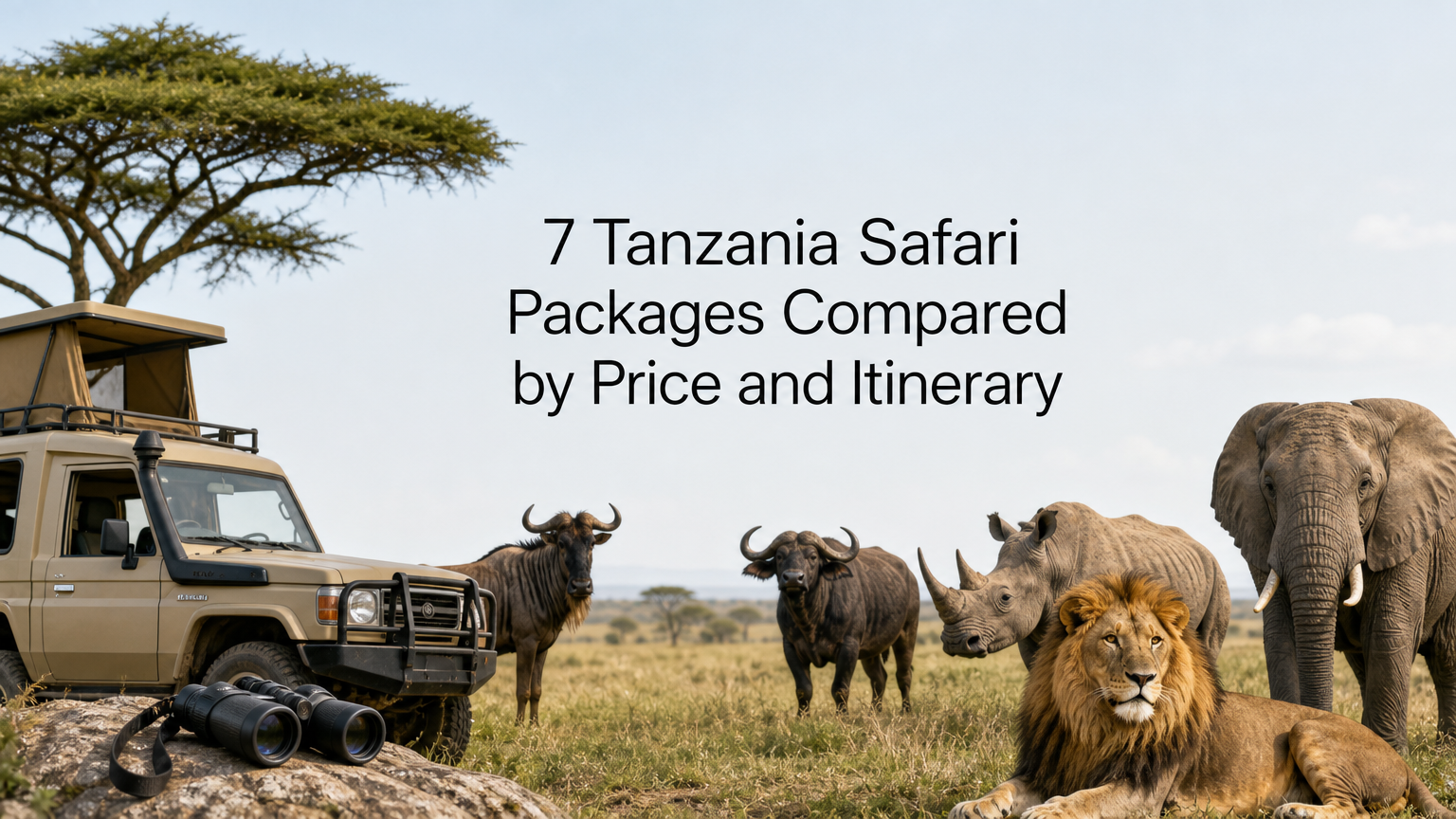
The best African safari Tanzania offers is the one that fits your travel month, your budget and the animals you most want to see. First-timers usually do best on the northern circuit of Tarangire, Ngorongoro Crater and the Serengeti over 7 to 10 days. Migration chasers should plan around the herds, repeat visitors should look south, and honeymooners should add Zanzibar. Travelers who want Kenya as well should combine both countries. Private trips of 7 to 10 days start near $2,000 and pass $12,000 at the luxury end.
The trouble is that Tanzania safari packages look alike online. Every page promises the Serengeti, and prices swing from a few hundred dollars to as much as $3,500 per person per day with little explanation. You end up comparing itineraries that are not the same trip.
This guide sets seven kinds of Tanzania safari side by side, each with its route, the traveler it suits and a realistic price. Two shorter sections then explain how prices are built and how to choose and book. Extra Miles Unique Adventures, a Nairobi-based operator that has planned private East Africa safaris since 2007, comes first because its Kenya and Tanzania combinations fit many first trips.
1. Kenya and Tanzania combination safaris
A Kenya and Tanzania combination is the best pick if you want the Masai Mara and the Serengeti in one private trip, with one operator handling both sides of the border. Extra Miles Unique Adventures offers four of these, from 7 to 10 days.
Route and highlights
All four are private safaris planned around your dates and pace. Each pairs Kenyan parks with the northern Tanzania circuit, and the longer ones add the Serengeti, Ngorongoro Crater and the Masai Mara.
| Package | Length | Route highlights | From price |
|---|---|---|---|
| 7-Day Epic Kenya & Tanzania Safari Experience | 7 days, 6 nights | Amboseli scenery, northern Tanzania circuit | $2,063 |
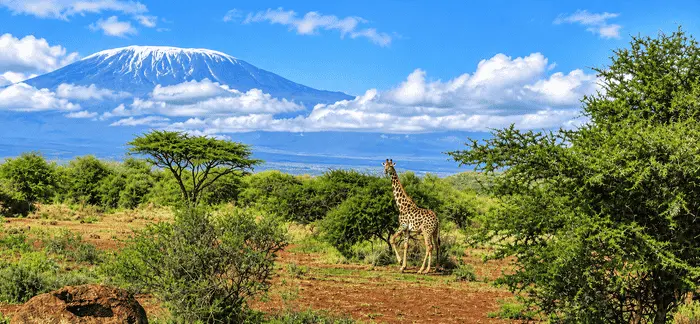
| 8-Day Magical Kenya & Tanzania Safari | 8 days, 7 nights | Kilimanjaro views, Ngorongoro Crater, Serengeti plains, Masai Mara | $2,711 |
| 9-Day Ultimate Kenya and Tanzania Safari Experience | 9 days | Great Wildebeest Migration, Ngorongoro Crater, Serengeti, Masai Mara, Lake Nakuru | $3,429 |
| The Grand East African Luxury Safari | 10 days, 9 nights | Masai Mara, Serengeti, Ngorongoro Crater in luxury comfort | $5,405 |
Crossing a border adds logistics, so ask where the trip starts and ends and how transfers and park fees are handled. The team coordinates accommodation, transport and guides through trusted regional partners, which is why one itinerary can cover both countries. The Grand East African Luxury Safari uses a pop-up roof 4x4 Land Cruiser for all transportation.
A combination safari gives you two countries' best parks in one private itinerary, planned by one team.
Who it suits
This format suits couples, families and small groups who want variety without booking two trips. The 7-day version works for a short break. The 8-day trip is the balanced choice for seeing both countries, and the 9-day trip is built for travelers who want migration country, Big Five encounters and Kilimanjaro views together.
The 10-day Grand East African Luxury Safari suits travelers who want more time in the wilderness and a comfortable pace. If you want Tanzania alone, Extra Miles also builds tailored itineraries around the Tanzania destinations it lists, including the Serengeti, Ngorongoro and Zanzibar.
Typical price
Prices run from $2,063 for 7 days to $5,405 for 10 luxury days. These are from-prices, and your final quote depends on dates, group size and accommodation tier. Before you compare them with other offers, confirm these points:
- Whether the price is per person and for how many travelers
- Which accommodation tier the quote assumes
- Whether park fees, transfers and drinks are included
- Whether any flights are part of the price
The process is simple. You share dates, group size, parks and style. You then receive a custom itinerary and quote that is refined with you, and the team responds to enquiries within 24 hours.
2. Classic northern circuit safari
The northern circuit is the safest first choice, because Tarangire, Ngorongoro Crater and the Serengeti put all of the Big Five within reach in 7 to 10 days. Most Tanzania safari packages are built on this route.
Route and highlights
Most trips start in Arusha, and many guests fly into Kilimanjaro International Airport. A typical order looks like this:
- Tarangire: large elephant herds and baobab trees.
- Ngorongoro Crater: dense wildlife inside an ancient volcanic caldera, and your best chance of a black rhino.
- Central Serengeti (Seronera): big cats, and one of the most reliable places in the country to see lions in trees.
- Northern or western Serengeti: an optional extension when the herds are in that area.
Lake Manyara works as a short scenic stop. Ten nights is a comfortable length, because it avoids rushing between parks. Seven days works if you accept shorter stays at each stop.
Ten nights is enough to see the northern circuit without turning it into a drive-through.
Who it suits
This is the right package for first-time safari travelers, couples and families who want a proven route. It also suits photographers who value predictable sightings over remote camps. Any month can work, but mid-March to mid-May brings the long rains, so you trade comfort for lower prices.
If you have only a week, stay on this circuit and skip the beach add-on. A 7-day northern circuit done well beats a 7-day trip that adds two more regions.
Typical price
Two reference points show the spread for a private trip. Park fees and lodging drive most of the difference.
- Budget, 7 days: from about $2,450 per person, excluding internal flights.
- Luxury, 10 days: $12,000 or more per person.
The Serengeti has some of the highest park fees in the country, while Tarangire costs less. Overnight stays inside parks add concession fees on top of entry fees. Sleeping outside the parks other than the Serengeti is the easiest way to keep costs down.
3. Great Migration safari
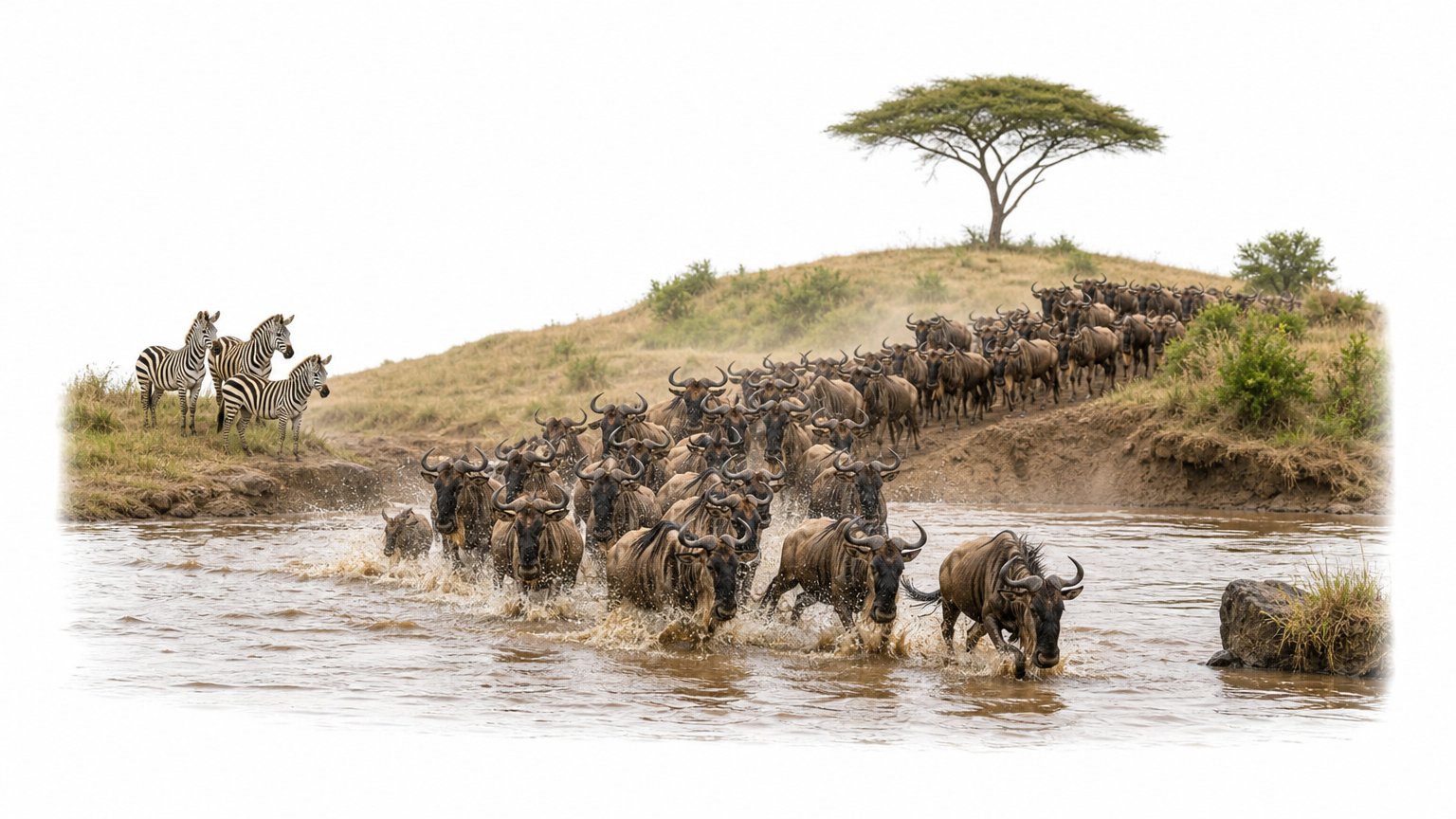
A Great Migration safari is a timing decision first, because the herds of more than 2 million wildebeest, zebras and antelopes move through the Serengeti on a rain-driven cycle. Your month and camp location matter more than the park name.
Route and highlights
The migration has three main phases you can see in Tanzania. Dates are guides, because the herds follow rain and grazing.
| Phase | Typical months | Where |
|---|---|---|
| Calving season | Mid-January to mid-March | Southern Serengeti and Ndutu |
| Grumeti River crossings | May to mid-July | Western corridor |
| Mara River crossings | Mid-July to mid-October | Northern Serengeti |
Thousands of calves are born each day in the calving season, which also draws predators. Seasonal tented camps move with the herds, so they often give the closest access.
Book the camp for where the herds are likely to be in your month, not for the park's most famous name.
Who it suits
This package suits wildlife photographers, repeat safari travelers and anyone for whom the herds are the whole point. It also suits travelers who can pick dates early. The river crossings are a peak-season draw, so book far ahead if you want July to October.
Kenya's Masai Mara shows only the crossing phase, while Tanzania lets you see all three. Extra Miles' 9-day Ultimate Kenya and Tanzania Safari, covered in item 1, is built around migration country if you want both sides.
Typical price
The calving season in January and February is usually moderately priced, and the crossings from July to October sit at the top of the price range. Many of the best lodges sell out up to a year in advance, so late bookings often mean a compromise on camp location. Ask your operator which camp it proposes for your dates and how far it is from the herds.
4. Southern circuit safari in Ruaha and Nyerere
A southern circuit safari is the best pick if you want fewer vehicles and a wilder feel. It centers on Ruaha National Park and Nyerere National Park, the area that was once part of the Selous Game Reserve.
Route and highlights
Dar es Salaam is the usual gateway, and internal flights to bush airstrips are common. Ruaha offers strong predator sightings, and wild dogs are present mainly in the southern parks. Nyerere adds boat safaris on the Rufiji River alongside game drives.
Camps here are smaller and more remote than most on the northern circuit. A southern trip can also be paired with Zanzibar from Dar es Salaam, which gives a quieter alternative to the classic route.
Who it suits
This package suits repeat visitors who have already seen the Serengeti and want solitude. It also suits travelers who care more about sightings without crowds than about the Ngorongoro Crater. First-timers who want to see the Big Five in one short trip are better served by the northern circuit.
Because the parks are remote, choose a guide-led operator with experience here. Distances are long, and a good plan decides where to fly and where to slow down.
The southern circuit trades the northern circuit's convenience for space and fewer vehicles.
Typical price
Expect prices at or above northern circuit mid-range levels. Remote camps cost more, and scheduled flights add roughly $200 to $500 per person each way. One operator quotes a broad Tanzania range of $350 to $3,500 per person per day, and southern trips usually sit in the middle to upper part of it.
- Ask whether flights are included in the quote.
- Ask how many nights you spend in each park, since fly-in trips punish short stays.
- Check the dry season, June to October, when wildlife concentrates near water.
5. Tanzania safari with a Zanzibar beach finish
A safari followed by Zanzibar is the best choice for honeymooners and anyone who wants to rest after early game drives. The islands sit off Tanzania's east coast, and flights connect them to the Serengeti and other safari areas.
Route and highlights
A common plan is 5 to 6 days of safari on the northern circuit and 3 to 4 days on the island. You can fly from a Serengeti airstrip, or take a ferry from Dar es Salaam if you prefer the cheaper option. Stone Town is worth a half day, and you should bring modest clothing that covers shoulders and knees there.
Zanzibar weather differs from the mainland. The long dry season, June to September, is the best beach period, and the March to May rains are the weakest.
Put the beach last, because bush days start early and Zanzibar is the reward for them.
Who it suits
This package suits couples and honeymooners, and families who want a mix of pace. It also suits travelers who find a full 10 days of game drives tiring. If you are choosing between Kenya and Tanzania for the beach, Kenya's Diani coast is the alternative bush-and-beach pairing.
Add time when you add regions. One luxury operator suggests 14 to 18 nights when combining Zanzibar with other countries, which gives the trip room to breathe.
Typical price
Your total is the safari price plus the beach stay and transfers. The beach part varies more than any other element, from simple guesthouses to resort villas.
- Flight from the Serengeti or another park to Zanzibar: typically $200 to $500 per person each way.
- Ferry from Dar es Salaam: cheaper, but slower.
- Beach accommodation: budget at least a few nights at your chosen tier, and book early for June to September.
Ask for the safari and beach legs to be priced separately, so you can see where the money goes.
6. Luxury fly-in safari
A luxury fly-in safari is the best option when time and comfort matter more than price. You fly between small airstrips instead of driving, and you stay in small camps close to the action.
Route and highlights
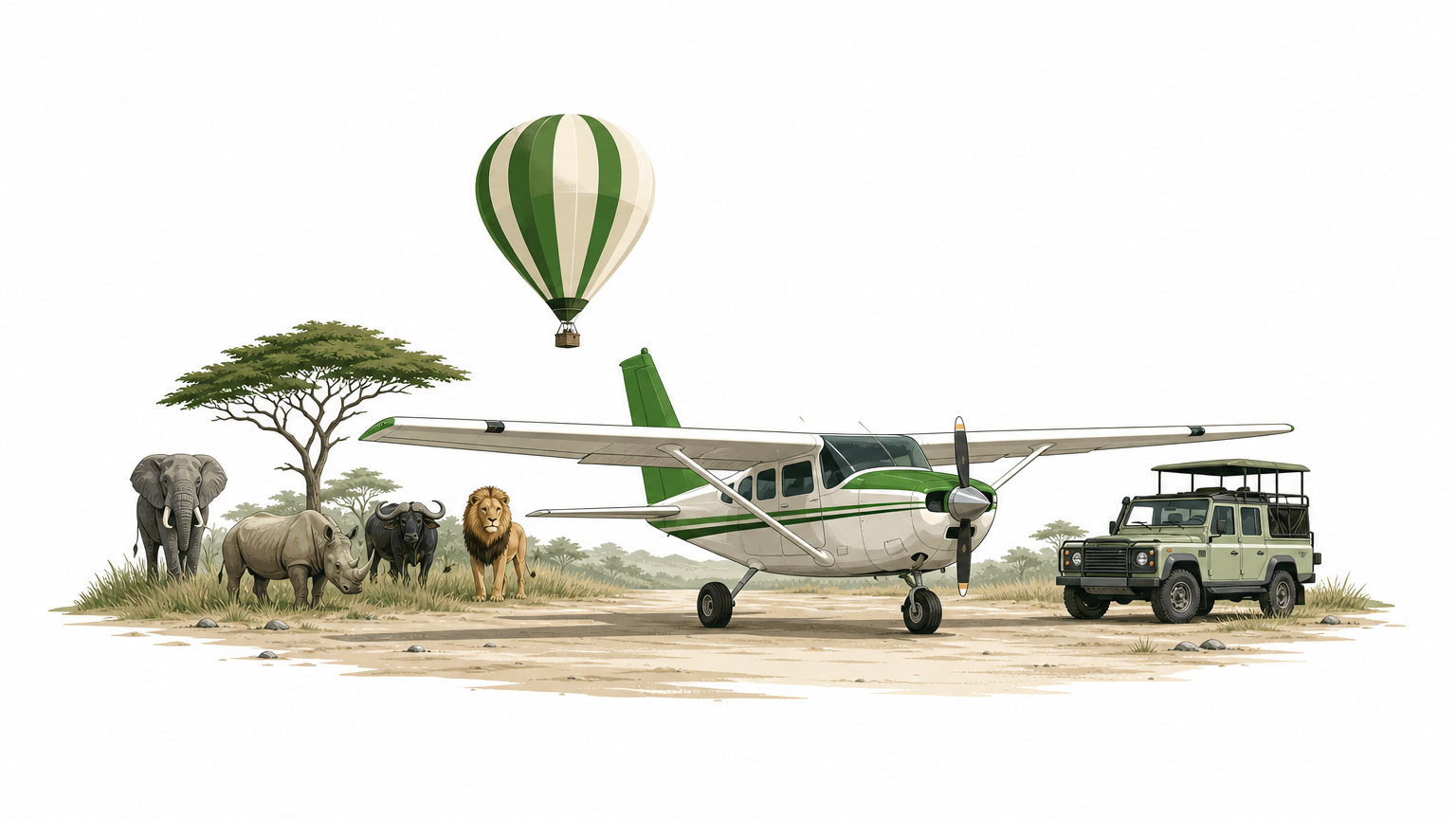
A typical route flies into the Serengeti, with stays in private areas or well-placed tented camps. It may add Ngorongoro and Tarangire by air or road. Optional dawn hot-air balloon flights over the Serengeti are a common luxury add-on.
Scheduled flights replace long bumpy drives, especially the final stretch into the Serengeti. Camps are small, guiding is specialist, and the vehicles are not shared.
Who it suits
This suits honeymooners, milestone trips and travelers who cannot sit through long drives. It also suits anyone who has only a week and wants to see more. If your budget is flexible, the extra cost buys time in the field rather than time in a truck.
Luxury here is a spectrum. Mid-range lodges and top-end camps both call themselves luxury, so ask for the exact camp names and compare the room rates yourself.
Luxury on safari buys time in the field and small camps, not just a nicer room.
Typical price
Prices rise steeply. A top Serengeti lodge can reach $2,000 per person per night, and some published 10-day luxury itineraries from overseas operators start above $20,000. Another operator lists a 10-day private luxury trip at $12,000 or more per person.
Local operators usually price lower for similar camps because overseas agents add their own margin on top. For scale, the 10-day Grand East African Luxury Safari in item 1 starts at $5,405. Compare camp names and inclusions, not just totals.
7. Budget, group and day-trip safaris
Budget and short options work if you accept trade-offs in comfort or schedule. The three main versions are group departures, budget camping and day trips.
Route and highlights
Group departures share a vehicle and a fixed itinerary on the northern circuit, usually with set lodges or camps. Budget camping trims accommodation costs by using basic tents or simple lodges. Day trips include a Ngorongoro Crater day trip and fly-in trips to Mikumi National Park from Zanzibar.
A private trip gives you control over schedule and sightings. In a group, you share pickup times with other passengers, and some vehicles squeeze in a third row of seats that restricts the view. Avoid minibuses, which are involved in more accidents than safari trucks.
Who it suits
Group trips suit solo travelers on a tight budget, since a private trip adds a single supplement. Day trips suit beach visitors who want a taste of the bush. If you are traveling as a couple or with friends, compare a private quote before you assume it costs far more.
For example, the 7-day private Kenya and Tanzania trip in item 1 starts at $2,063. Splitting a private vehicle between two or four people narrows the gap with a group trip.
A group safari is cheaper only if you accept shared schedules and basic lodging, so compare a private quote before deciding.
Typical price
One operator puts the private-versus-group gap at roughly $100 per person per day. A group trip is cheaper in practice only when you choose budget camping.
- Budget accommodation: about $50 to $100 per person per night.
- Budget private trip: from about $2,450 per person for 7 days, excluding internal flights.
- Day trips: the cheapest way to see wildlife, but you lose the early-morning and late-afternoon hours when animals are most active.
What a Tanzania safari costs and why prices differ
Most private Tanzania safaris cost between about $350 and $3,500 per person per day, and what separates the ends of that range is lodging, vehicle sharing and flights. The sections below break the total into parts you can check against any quote.
Where the money goes
Five cost items explain nearly every price you will see. The figures below are typical ranges for private trips.
| Cost item | Typical figure | Note |
|---|---|---|
| Accommodation | $50 to $100 budget, $100 to $250 mid-range, $250 to $500 luxury, $500 to $1,000+ top luxury, per person per night | Excludes overnight park fees |
| Vehicle and driver-guide | $250 to $350 per day | Fuel usually extra |
| Park fees | Vary by park | Serengeti among the highest, Tarangire lower |
| Scheduled internal flight | $200 to $500 per person, one way | Optional on most routes |
| Tips | $10 to $20 per person per day | For your driver-guide |
Over half of a typical private safari price goes to accommodation and government park fees. The operator's own margin is usually small.
A worked example: sharing the vehicle
Group size changes your share of the vehicle more than anything else. Take a 7-day trip with a vehicle and driver-guide at $300 per day, which is $2,100 for the week. Two travelers pay $1,050 each for it. Four travelers pay $525 each, a saving of $525 per person.
Lodging is charged per person, so your total drops by less than the vehicle share does. The saving is largest between two and four people and shrinks as you add a fifth, sixth or seventh. A group of two to five usually gives the best mix of cost and room.
Costs people forget
Budget for tips, which are technically optional but generally expected, and for a small amount of cash in Tanzanian shillings for tips and small purchases. Add travel insurance with trip interruption cover. Check visa rules for your passport with the Tanzanian government before you book.
Ask whether the quote includes park fees, because a low headline price sometimes excludes them. Check what international flights cost separately, since few Tanzania safari packages include them.
Compare quotes line by line for lodging tier, park fees and flights, because a cheaper total often just leaves something out.
How to choose and book your safari in Tanzania
Choose by month first, then by travel style, then by operator. The right package is the one whose best season matches your dates.
Match the package to your month
The long dry season, June to September, is the busiest and most expensive, with the best game viewing. January and February are warm, with calving in the south. The long rains from mid-March to mid-May are cheapest but wettest, and October and November bring short, quieter rains.
| Package | Best months | Cost level | Best for |
|---|---|---|---|
| Kenya and Tanzania combination | July to October for migration, other months work | Mid to high | Two countries, one trip |
| Northern circuit | June to October, January to February | Mid | First safari |
| Great Migration | January to March, July to October | High in peak | Photographers |
| Southern circuit | June to October | Mid to high | Repeat visitors |
| Zanzibar combination | June to September for the beach | Mid to high | Honeymooners |
| Luxury fly-in | June to October, book far ahead | High | Comfort and time |
| Budget or group | Any month, rainy months cheapest | Low to mid | Solo and budget |
Who to book with and what to ask
Local operators usually price lower than overseas agents, who often subcontract the trip and add their own margin. Overseas agents can add flights and package protection, but one operator estimates the total at 20% to 300% more. Self-drive is rarely worth it, because most parks expect a specialist safari vehicle and a driver-guide.
Before you pay a deposit, ask these questions:
- Is the vehicle a pop-up roof 4x4, and is a window seat guaranteed?
- Who is the guide, and how long have they worked these parks?
- What is included: park fees, flights, transfers and drinks?
- What are the cancellation terms?
Pay deposits by credit card where possible for extra protection.
Safety, health and packing basics
Check your government's current travel advisory before you book. US travelers can see the State Department's Tanzania advisory. Tanzania is a malaria area, so see a doctor or travel clinic before departure.
Skip black and dark blue, because tsetse flies are drawn to dark colors. Pack neutral khaki, beige or olive clothing, a warm layer for early drives and sun protection.
Picking your Tanzania safari
The best African safari in Tanzania depends on your month and your priorities. The northern circuit suits first-timers, the migration safari rewards early planning, the southern circuit gives space, Zanzibar gives rest and a luxury fly-in gives time. Budget and group options work when you accept shared schedules.
Whatever you choose, compare the same things: lodging tier, park fees, flights and group size. That keeps quotes honest.
If you want a private trip that covers Tanzania, Kenya or both, share your dates and ideas with the Extra Miles team and request a tailored itinerary and quote.